Local nonprofit distributes naloxone at Bacerra’s office hours as overdose deaths trend downward
The Asian American Senior Citizens Service Center partnered with Councilmember Phil Bacerra to distribute naloxone during office hours Saturday, as opioid-related overdoses show a countywide decline.

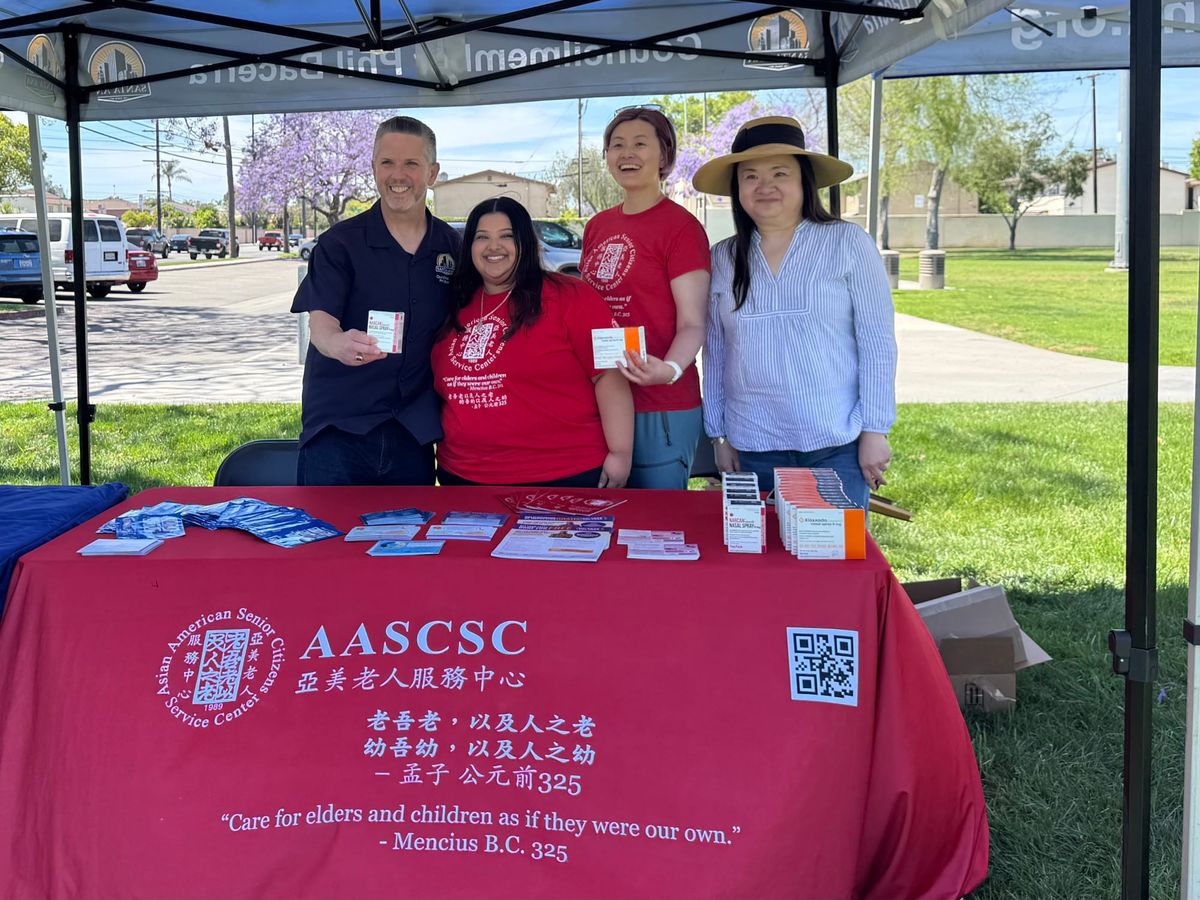
The Asian-American Senior Citizens Service Center set up next to Ward 4 Councilmember Phil Bacerra’s tent Saturday during office hours at Adams Park, where staff handed out fentanyl test strips and boxes of four and eight milligram doses of Naloxone, commonly known as Narcan.
The effort comes as Orange County continues to grapple with the impacts of the opioid crisis, which surged sharply during the coronavirus pandemic, but is now beginning to show signs of decline.
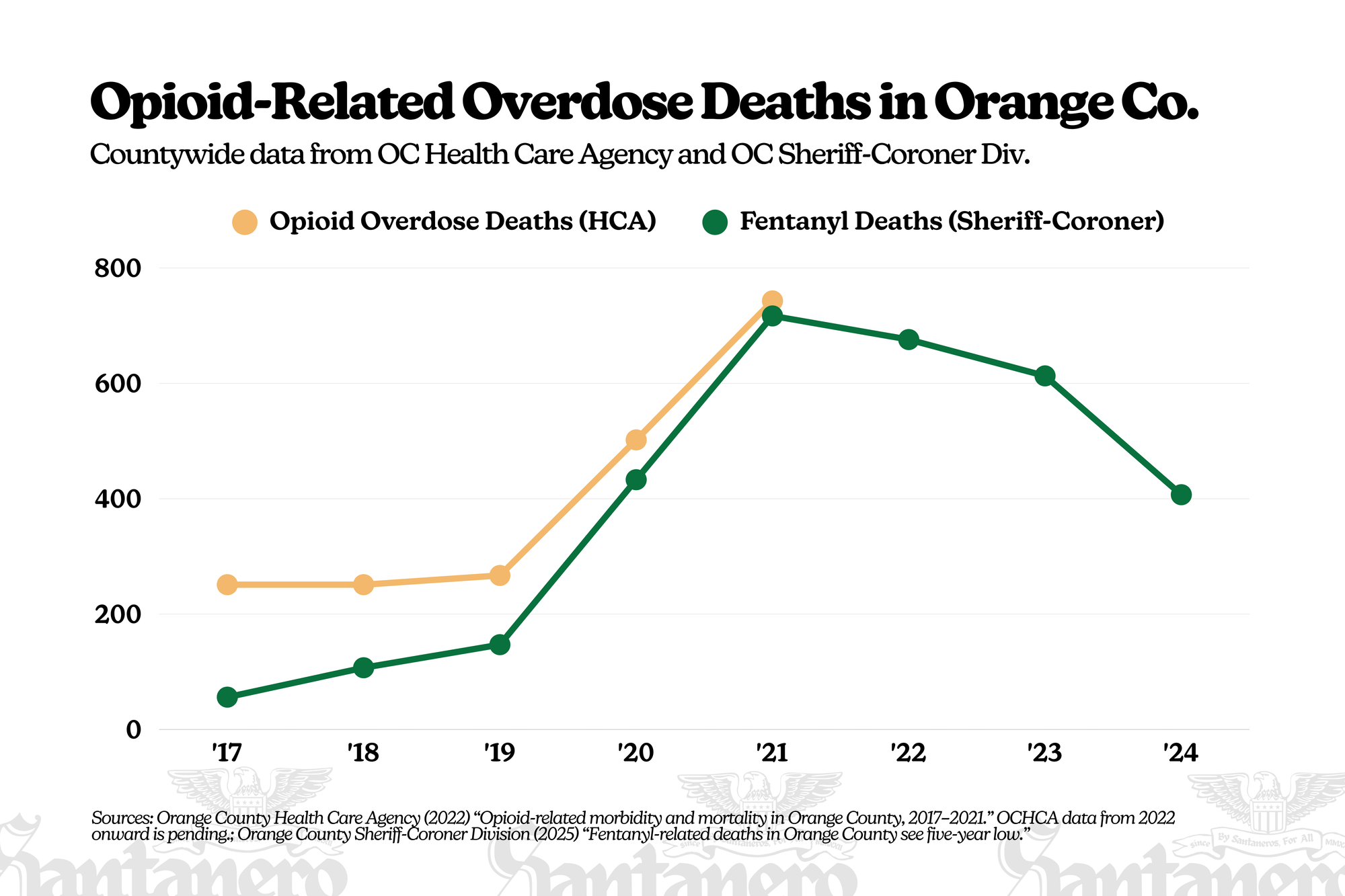
According to a summary report published by the Orange County Health Care Agency (OCHCA), between 2019 and 2021, opioid related overdose deaths in Orange County nearly tripled, rising from 267 deaths in 2019 to 743 in 2021 [yellow line includes fentanyl/green data as a total for that year]]. The death rate increased from 8.4 to 23.2 per 100,000 residents during that same period.
Other opioids made up a much smaller share. In 2021, deaths involving natural or semi synthetic opioids totaled 122, heroin accounted for 50 deaths, and methadone was involved in 27 deaths.
Emergency room visits for opioid overdoses also climbed after 2019, reflecting a broader increase in drug related harm across the county, mostly pointing to fentanyl as a major driver of the surge.
By 2021, fentanyl had become the main driver of overdose deaths in Orange County, from 56 in 2017 to 651 in 2021 [green data].
However, recent data by the Orange County Sheriff-Coroner Division showed a downward trend in fentanyl-related deaths as they fell to their lowest level in five years. The county recorded 407 fentanyl related deaths in 2024.
Officials citied their efforts in expanded education campaigns, increased enforcement targeting drug distribution networks and wider access to treatment and recovery services as possible reasons for the drop in opioid-related overdose deaths.
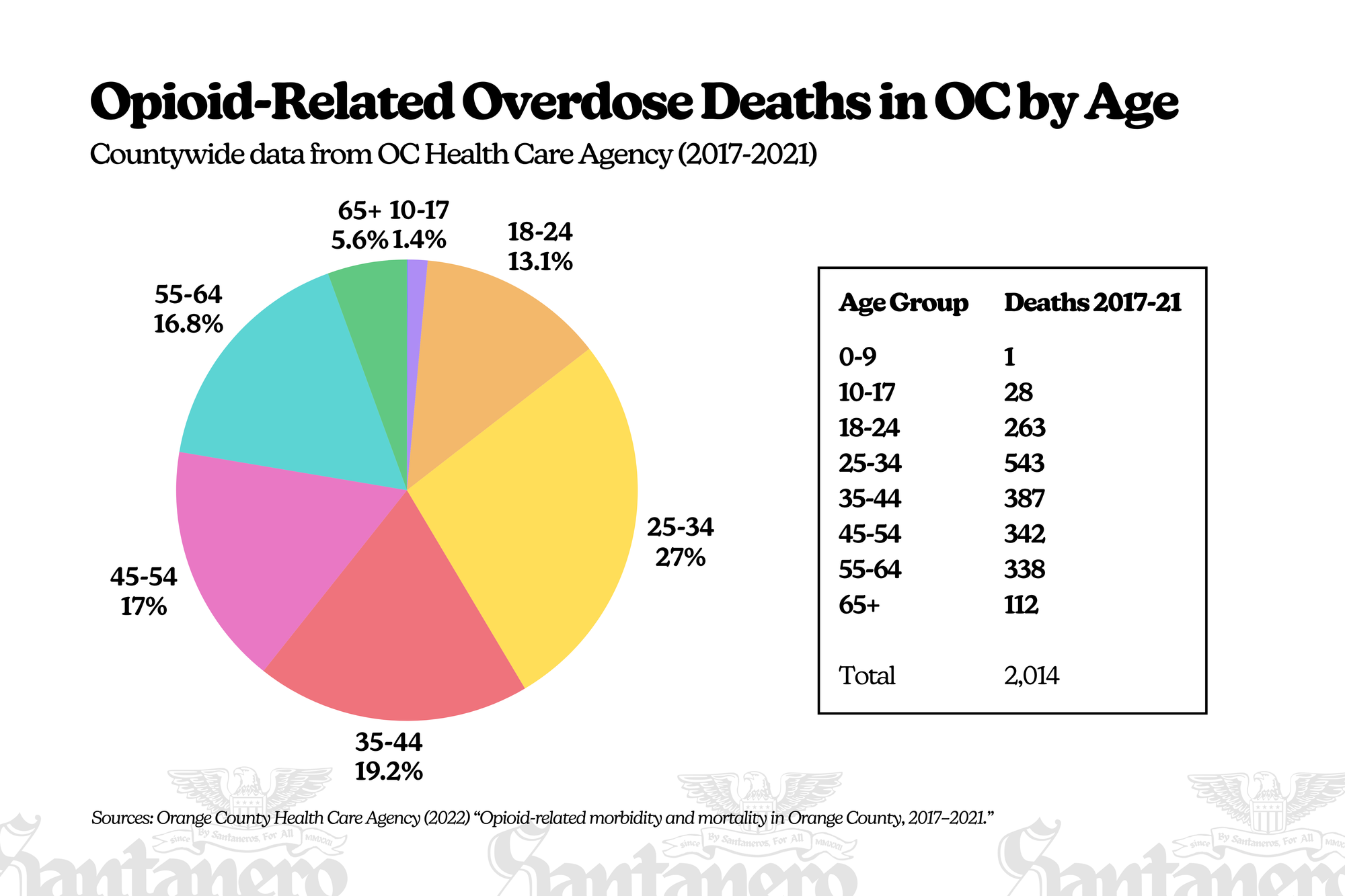
The impact has been especially pronounced among young and middle aged adults. County data from 2017 to 2021 shows people ages 25 to 34 accounted for the largest share of overdose deaths, followed by those ages 35 to 44 and 45 to 54.
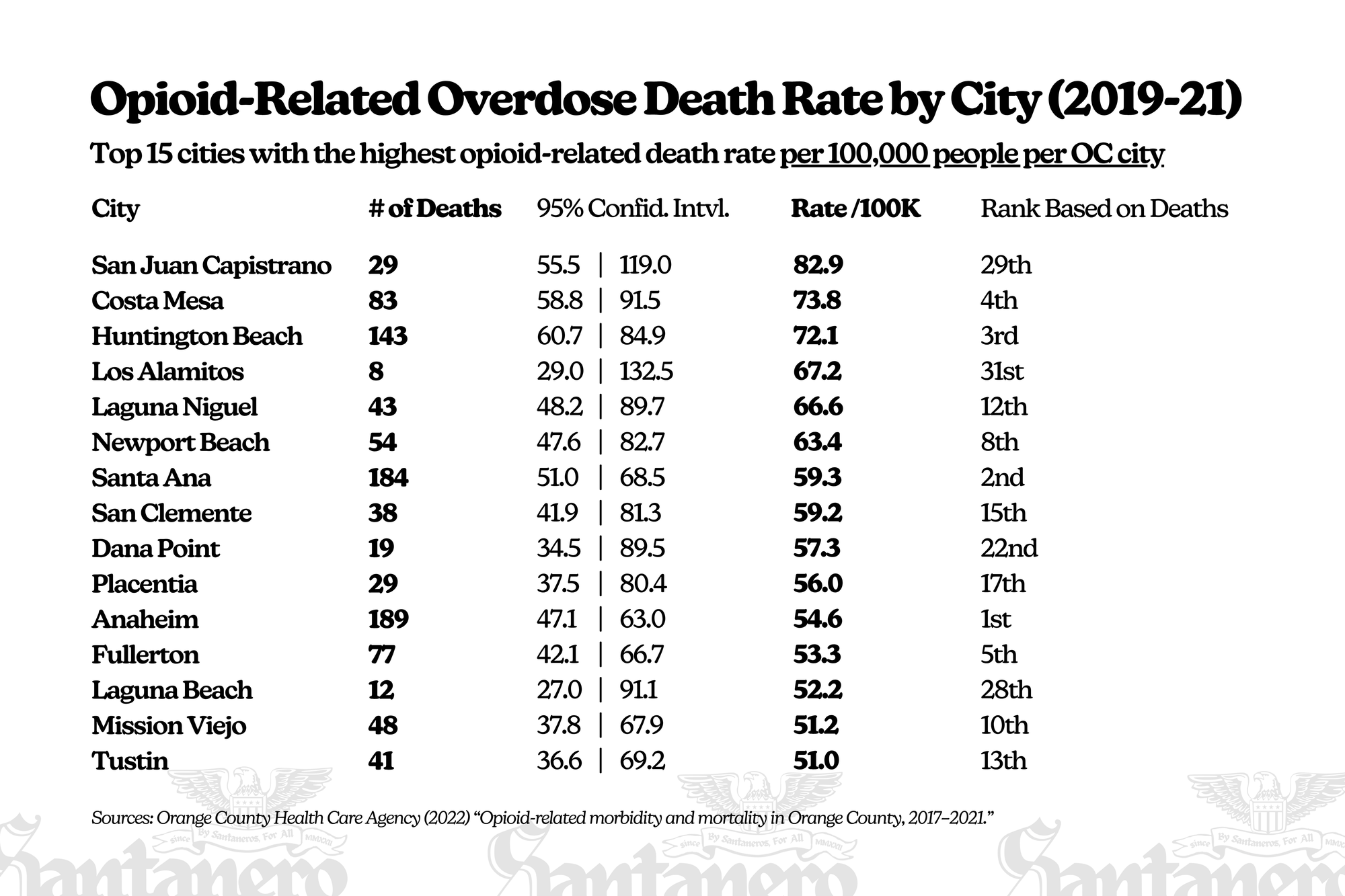
While the crisis has affected communities across Orange County, its impact varies by city.
Data from the Orange County Health Care Agency shows that coastal cities reported the highest overdose death rates between 2019 and 2021, led by San Juan Capistrano, Costa Mesa and Huntington Beach.
Santa Ana ranked seventh among Orange County cities, with an overdose death rate of 59.3 per 100,000 residents, well above the countywide average of 47.4 for a dataset between 2019 and 2021.
The city also experienced high levels of non-fatal overdoses. From 2019 to 2021, Santa Ana recorded 431 opioid related emergency department visits, with a rate of 138.8 per 100,000 residents.
The AASCSC told The Santanero that harm reduction tools like naloxone and fentanyl test strips are becoming more widely used, even showing up at raves across Southern California where they are now commonly distributed to attendees.
To learn more about Naxolone and its application, click here.
Is there a difference between the 4mg and 8mg naloxone?
According to public health guidance, naloxone is typically administered in standard 4 milligram doses, with additional doses given if the person does not respond. Higher-dose versions, such as 8 milligrams, are also available and may be used in cases involving potent opioids like fentanyl. While naloxone can trigger withdrawal symptoms, especially at higher doses, health experts emphasize that reversing the overdose is the priority.
The Santanero is providing this information with the note that readers understand this is not medical advice. If there’s an emergency, dial 911.