Alejandra Rodriguez on the Issues: SAUSD Board Area 5

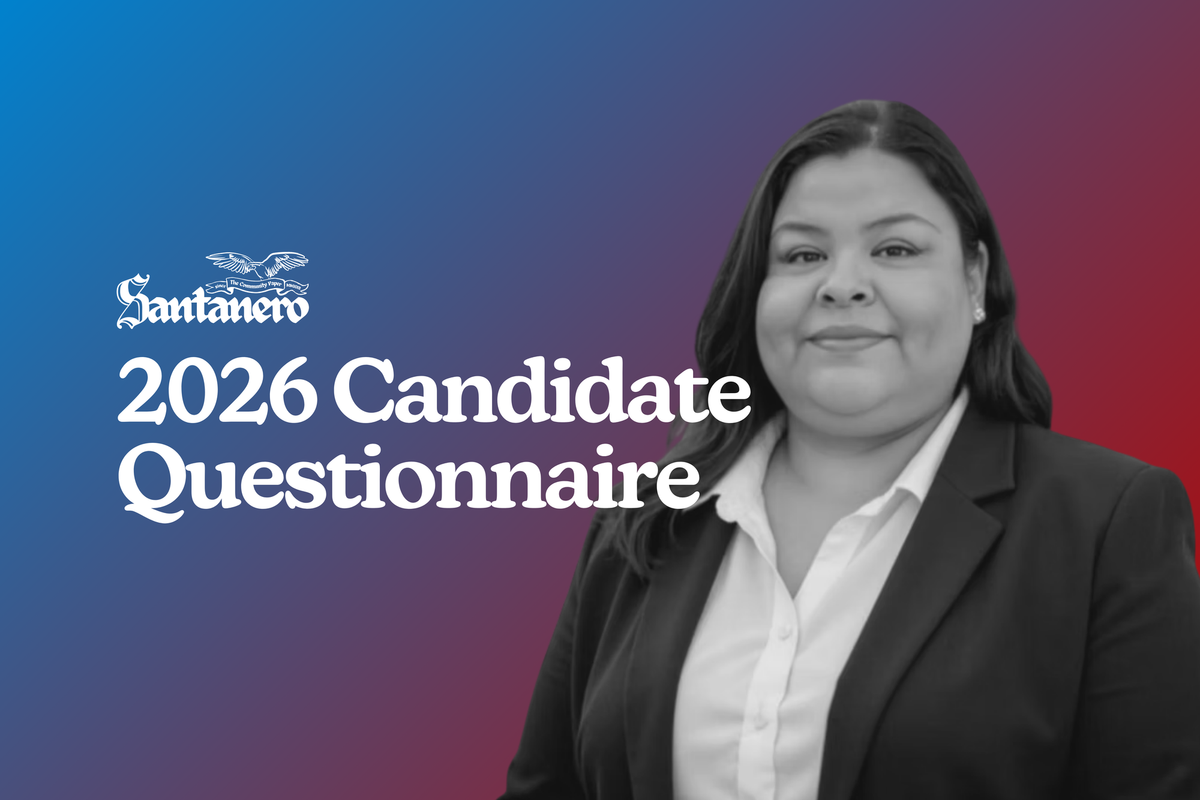
Alejandra Rodriguez, 40, is a lifelong Santa Ana resident, born and raised in the city. She grew up in a family of four with hardworking parents and one sibling, and credits her mother’s involvement in her education—from chaperoning field trips to attending school events—with influencing her own involvement as a parent.
Rodriguez attended Edison and Washington elementary schools, McFadden Intermediate and MacArthur Fundamental Intermediate, and Saddleback High School and continuation school, graduating in 2004. She says being bullied as a child shaped her understanding of challenges students can face that may not always be visible to others.
A shipping clerk who works in Anaheim, Rodriguez has been involved in Santa Ana schools as a parent volunteer since 2016, participating in School Site Council, ELAC/DELAC and the Parent Teacher Organization. Her son, Jesse Rodriguez, also served on the Santa Ana Youth Commission before the City Council dissolved the commission, along with several others, amid budget cuts.
She has served as a neighborhood association leader since 2023. Rodriguez’s city service includes appointments to the Historic Resources Commission from 2024 to 2025 and the Parks and Recreation Commission from 2025 to its dissolvement.
Per our policy, The Santanero does not endorse any candidate or ballot measure.
How to read this questionnaire
Questions are grouped by issue. Use the blue search tool below to find a topic or question and jump directly to Rodriguez's full response. The complete wording of each question is preserved so readers can see exactly what the candidate was asked.
A separate section featuring questions submitted by community members can be found near the end of this questionnaire.
Absenteeism
Chronic absenteeism remains a major challenge for school districts. Based on what you have seen during your time on the board, what do you believe is the most important reason some students who are capable of attending school regularly are choosing not to show up, and what specific action would you bring before the board to address it?
Rodriguez: I believe one of the biggest reasons students stop showing up is that they do not feel connected or supported. It may be bullying, problems with classmates, feeling embarrassed or lonely, or something happening at home.
I would support an attendance plan that focuses less on punishing students for missing school and more on recognizing them for showing up. If a student feels alone or does not have friends, we should find ways to help them feel included. For example, students could be given leadership opportunities, such as greeting other students in the morning or helping with school activities, so they feel like they are part of the school community.
If something is happening at home, I do not want us to simply hand families a list of resources and expect them to figure everything out on their own. I want our schools to follow up, help families connect with those services, and make sure they actually receive the support they need.
The goal should be to find out what is keeping a student away, help remove that barrier, and give them a reason to want to come back to school.
Budget
Cuts: What Gets Axed?
If elected and SAUSD faces additional budget reductions, how would you decide what gets cut and what should be protected? What principles would guide your decisions when reductions affect staffing, programs, administration, school sites, and student services?
Rodriguez: If more budget cuts are needed, I would protect the services that have the biggest direct impact on students first. That includes classroom teachers, special education services, counselors, student safety, and programs that are clearly helping students succeed.
Before cutting those areas, I would look at administration, vacant positions, outside contracts, duplicate services, and programs that are not showing results. If a program is costing a lot but students are not benefiting from it, I would support reducing or ending it and using that money where it is needed more.
Before making cuts, I would want to see the cost of each program, how many students use it, and whether it is helping them.
The first cuts should come from areas that are not helping students, not from the services students depend on most.
Partnership with City
Both the City and school district face significant budget challenges in the coming years. While education is primarily the responsibility of the school district, the City also provides libraries, recreational facilities, and other resources used by Santa Ana youth. How would you collaborate with the city to make efficient use of limited resources while maintaining services for youth? What more, if anything, should the district do to expand students’ access to studying spaces, programs, and resources outside of school?
Rodriguez: I would want the City and SAUSD to work together so we are not spending limited funds on the same services.
We should look at ways to share libraries, parks, recreation centers, school facilities, and after-school programs. If the City already has a program or space available for youth, the district should help students and families use it instead of creating another program that does the same thing.
I would also support more safe places for students to study after school and on weekends, with Wi-Fi, homework help, and a place to work. This is especially important in Area 5, where families still do not have a library or community center nearby. Memorial Park’s new aquatic center is expected to add another resource for the community, but families also need to know what youth programs and services will actually be available there.
The City and district should look at where the biggest gaps are and work together to fill them. With limited funding, we need to share the resources we already have and make sure every part of Santa Ana has access to services for youth.
Revenue Options
If elected, would you support consolidating schools or programs, repurposing underused campuses, or redeveloping district-owned property if doing so could reduce long-term costs or generate additional revenue? How would you balance the financial value of those decisions against the importance of neighborhood schools and community use of district property?
Rodriguez: I would be open to looking at these options, but I would not make a decision based on money alone.
I would want to know how many students are using the school, how much it costs to keep open, how families would be affected, and whether the property could still be used for students or the community.
Families should be part of the conversation before any major decision is made. If money is saved or earned, I would want it to go back into student services, classrooms, and programs.
Campaign Goal
If elected, at the end of your first year of the new term, name one concrete result for the SAUSD community that you intend to accomplish.
Rodriguez : By the end of my first year, I want families to feel confident saying, “If I have a problem, I know what to do and who to contact.” Each school should have a clear process for helping parents with questions or concerns, and families should feel supported instead of confused about where to go.
I also want families to stay informed about new laws, district changes, and decisions that may affect their children. As their board member, I would make sure they know what is happening and how to contact me directly. When parents are informed and know how to get help, they are in a better position to support their child, and that helps students succeed too.
I would measure success by whether families understand where to go for help, feel supported at their school site, and know how to reach me when they need to.
First Amendment x Public Comments
Parents and community members sometimes come before the board with strongly held concerns or beliefs, including views protected by the First Amendment that may be upsetting or objectionable to students or employees affected by the issue. If elected, how would you distinguish between a speaker’s right to be heard and whether the board should actually act on what that speaker is requesting? When responding to that concern could place a significant burden on particular students or staff, what would guide your decision?
Rodriguez: When someone comes forward with a concern, I believe there should always be follow-up. People should not take the time to speak and then feel ignored.
That does not mean every request should become policy.
Before making a change, I would look at whether it is legal, how it affects students and staff, whether it is fair, and whether it supports the district’s responsibility to educate all students.
If the answer is no, there should be a clear explanation why. If the concern can move forward, then it should go through the proper process.
Public input should matter, but decisions still need to be based on the law, facts, and the impact on the district as a whole.
Enrollment
SAUSD has experienced significant enrollment decline in recent years. If elected, what specific actions would you support to increase enrollment and retain families, and what measurable results would you expect during your first term?
Rodriguez: Enrollment decline is one of SAUSD’s biggest challenges, and I think we need to focus on bringing families in and giving them reasons to stay.
One of the first things I would look at is the enrollment process. Right now, enrollment is virtual, and that can be difficult for families who need help. Parents may go to a school office and still leave without the support they need. I would support more in-person help, better communication, and clear information about who families can turn to for assistance.
I would also want SAUSD to ask families why they are leaving. Exit surveys and parent feedback can help us understand if the reasons are academics, safety, school climate, programs, communication, or something else. We should not only point to declining birth rates and economic changes without also looking at what we can improve.
We also need to do a better job of showing families what SAUSD has to offer, including Dual Language, STEAM, career pathways, and other school-choice programs.
To measure progress, I would want SAUSD to track how many students stay, how many new families enroll, how many students leave, and why. I would also want us to look more closely at chronic absenteeism and the reasons students are missing school. If absences are health-related, that should be tracked separately so we can better understand the problem and respond appropriately.
We may not be able to control every reason enrollment is declining, but we can improve the way we support families and make SAUSD a district they want to choose and stay in.
Instructional Staff Support
Some teachers feel overwhelmed when they repeatedly raise concerns about a student’s behavior, classroom disruption, or lack of academic progress and do not believe those concerns are taken seriously or followed up on quickly enough. If elected, what would you support to ensure teachers receive timely administrative backing while students also receive appropriate academic or behavioral interventions?
Rodriguez: If a teacher raises the same concern more than once, there should be a clear next step.
An administrator should respond, the family should be contacted, and the student should get the right academic or behavioral support.
If the issue continues, it should move to a higher level of support. The union can also step in when concerns involve safety, workload, or whether the proper process is being followed.
Teachers should not have to keep asking for help without getting a response.
Lack of Programs at Schools
Students have raised concerns that some SAUSD high schools offer far fewer electives and career-oriented programs than others, while campuses with a wider range of programs can become much more attractive to families. At the same time, changes in technology and artificial intelligence may reduce demand for some traditional white-collar entry-level work while skilled trades and practical occupations remain essential. If elected, what would you propose to expand or restore practical courses such as culinary arts, home economics, construction, automotive, manufacturing, personal finance, and other career-technical programs across SAUSD high schools?
Rodriguez: Asking students which career and hands-on programs they are most interested in and then give priority to the ones that lead to strong job or training opportunities.
Because the budget is limited, I would not try to offer every program at every high school. Some programs could be shared between campuses, and students could travel to another school for certain classes.
I would also look for partnerships with local colleges, unions, and businesses to help with instructors, equipment, and training costs. If we add new programs, we may have to reduce electives that have very low enrollment or are not being used.
The goal is to give students more career choices while making sure the programs are affordable and available to students across the district.
Literacy & Math Achievement
If elected, what specific actions would you support to improve literacy and mathematics achievement and increase the number of students who successfully pass their English and math courses during the regular school year rather than needing summer school, credit recovery, or other remediation?
Rodriguez: I would support a board policy that requires schools to step in as soon as a teacher sees that a student is struggling in reading or math. We should not wait for progress reports or for a student to fail.
I would support funding for tutoring, small-group instruction, and intervention during the regular school year. I would also want parents notified early so they can understand what their child is struggling with and be part of the plan.
Schools should be expected to track whether the extra support is working and make changes if the student is still struggling.
I would measure success by looking at whether more students are passing English and math the first time, whether fewer students need summer school or credit recovery, and whether students receiving intervention are showing improvement during the school year.
The goal is to identify the problem early, provide help right away, and make sure the student, teacher, and parent are working together before the student falls too far behind.
Parent Engagement
Behavior Notification
When a student has repeated serious behavioral issues, schools can provide counseling, interventions, behavior plans, and consequences, but those efforts may have limited effect without consistent support at home. If elected, what expectations would you place on parents or guardians in those situations, and what should the district do when families repeatedly fail to participate or follow through?
Rodriguez: When a student has repeated serious behavior issues, the school and family need to work as a team. I would expect parents or guardians to stay involved, respond to the school, and take part in the plan. But we also need to understand that some families may be scared, working long hours, or have a family structure that looks different from what we are used to.
The district should make it easier for families to participate by offering flexible meeting times, clear guidance, and support from counselors or staff who can help them understand how to respond at home.
If a family still does not participate after the school has made reasonable efforts to reach and support them, the school should document that and continue with the interventions and consequences it can control. The goal should be to support the student while giving families a fair chance to be part of the solution.
Academic/Attendance Notification
If elected, what would you propose to increase regular parent participation before a student is already failing classes, missing school, or facing other serious problems? How would you improve the way SAUSD uses tools such as Aeries, school communications, and parent outreach so families can monitor attendance, grades, assignments, and academic progress throughout the year?
Rodriguez: I would not want SAUSD to rely only on Aeries or ParentSquare. Schools should also use phone calls, in-person conversations, and outreach during pickup, drop-off, school events, and parent meetings. We also need to remember that the person caring for a student may be a grandparent, relative, or another caregiver.
Many parents work long hours, so schools should offer flexible ways to connect, including evening calls, virtual meetings, and different meeting times when possible. I would also support simple, hands-on training so families know how to check grades, attendance, and assignments.
For families who may be more comfortable receiving information in another way, staff should be available to explain things by phone or in person and help them understand the next steps. The goal is to reach families early and in a way that works for them, before a student is already failing, missing school, or facing a bigger problem.
Position of a Board Member
Who do you believe you would be elected to represent as a school board member: students, parents, employees, taxpayers, the broader community, or some combination of them? When those groups want different things, whose interests should come first, and how would that guide your decisions on the board?
Rodriguez: I represent everyone, but my first responsibility is to students. When I say students, I mean ALL students. I would listen to families, employees, taxpayers, and the community, but when there is a conflict, I would focus on what best supports students’ education, safety, and future.
PBIS
SAUSD schools use approaches such as Positive Behavioral Interventions and Supports, or PBIS, which can include incentives and positive reinforcement. However, some students perceive situations where a student has a serious behavioral episode and then receives snacks, privileges, or other positive reinforcement as rewarding the behavior rather than holding the student accountable. If elected, how would you ensure SAUSD maintains an appropriate balance between behavioral support and meaningful consequences?
Rodriguez: I believe students should receive support, but serious behavior should still have a consequence. I would also want to look at who is handling the incident. If an activity supervisor or another staff member is the first to respond, they should be properly trained to de-escalate the situation and know what steps to take.
I would want SAUSD to look at whether behavior improves after an intervention, whether repeat incidents go down, and whether classrooms and campuses are safer.
If the same problems continue, the school should change the approach instead of repeating something that is not working.
Special Interests vs. Constituents
When your personal, political, or financial interests conflict with the concerns of the community, what specific actions or standards will you follow to ensure that you prioritize the residents you were elected to serve?
Rodriguez: If I ever have a personal, political, or financial conflict, I would be open about it and make sure the community’s interest comes first.
If it is a financial conflict, I would disclose it and step away from the discussion or vote when required. If I am unsure, I would ask for legal guidance before taking part.
For personal or political conflicts, I would ask myself whether I can make the decision fairly and whether it benefits the students and community, not me or someone I know.
My standard would be simple: be transparent, follow the rules, ask for guidance when needed, and step away when I should not be part of the decision.
Special Education Spending
Special-education spending has grown, and that may reflect an increase in students receiving IEP services. If elected, how would you determine whether that increased spending is producing better academic, behavioral, and long-term outcomes for students with IEPs, and what changes would you support if the results do not justify the level of spending?
Rodriguez: Every IEP is different, so success should not be measured the same way for every student.
For students in special education classes, I would look at whether they are meeting their IEP goals, making academic or behavioral progress, and becoming more independent. For students with IEPs in general education classes, I would also look at grades, classroom progress, and test results where appropriate.
I would also support regular training for both special education and general education teachers who have students with special needs in their classrooms.
If students are not making progress, the Board should review the services, training, and supports being provided. If a program or resource is not showing results for students, I would support changing it or cutting it and putting those funds toward something that is more effective.
Technology Use
AI Use vs. Basic Skills
SAUSD has increasingly embraced artificial intelligence in its schools, but students will also enter colleges, workplaces, licensing environments, and other settings where AI may be restricted or where they will be expected to demonstrate their own knowledge and skills without it. If elected, how would you ensure the district prepares students to succeed both with AI and without it? What balance would you support between teaching AI literacy and requiring students to independently develop and demonstrate writing, research, mathematics, critical-thinking, and problem-solving skills?
Rodriguez: I believe students should learn how to use AI, but they should also know how to do the work without it.
I would support having students regularly complete writing, math, research, and problem-solving on their own so teachers can see what they really understand.
Students should also learn how to use AI the right way, how to check if the information is correct, and when it should or should not be used.
The goal is balance. AI can help students, but it should not replace the basic skills they will need in college, at work, and in everyday life.
AI Culture in Schools
Students increasingly describe some AI-generated flyers, graphics, presentations, and other school or district materials as ‘AI slop’—content they see as low-effort, generic, or not worth engaging with, and even point to the free application Canva for flyers. If elected, what standards would you support for the use of AI in materials produced for students and families, and how would you prevent the district’s embrace of AI from lowering the quality or credibility of its communications?
Rodriguez: I do not think AI should be used to create flyers, presentations, or other materials for students and families. AI can help with ideas or wording, but it should not do all the work.
I would support a district standard that requires communications to be created and reviewed by staff before they are shared. Materials should be clear, accurate, professional, and easy for families to understand.
If tools like Canva can help staff make better flyers and presentations, I would rather see those used than low-quality AI-generated materials.
The district should not use AI just because it is available. If the quality of communication goes down, then we need to change how it is being used. Families and students should receive information that looks thoughtful, trustworthy, and worth reading.
Back to Computer Labs?
SAUSD moved away from traditional computer labs in favor of providing students with individual devices, including Chromebooks and, for younger students, iPads. As technology becomes more demanding and concerns grow about replacement costs, classroom distraction, gaming, and inappropriate use of AI during assignments, do you believe the district’s current one-to-one device model is still the best long-term investment? Would you support a different approach by grade level, such as iPads for younger students, more limited Chromebook use for older students, and a return to higher-performance shared computer labs for courses that need them?
We're having trouble displaying this response. Check back later.
Cell Phones in the Classroom
SAUSD restricts student cell phone use during instructional time, with classroom use generally requiring teacher permission. If elected, would you make the district’s phone policy stricter, less restrictive, or keep it substantially as it is? What rules would you support regarding when students may possess or use phones during the school day and what should happen after repeated violations?
Rodriguez: I would support one clear cell phone policy for all SAUSD schools. Phones must stay on silent and inside backpacks, and I think that works.
Phones should not be used during class. If a student needs to contact a parent, they can email or use the student phone (if any) in the office. In an emergency, there should be flexibility.
I would also keep the same rule during passing periods and lunch so it is simple and consistent.
If a student keeps breaking the rule, there should be a warning, parent contact, and stronger consequences if it continues.
The rule should be clear, fair, and the same at every school.
Test Scores
If elected, how much confidence would you place in standardized academic testing as a measure of how SAUSD students are actually performing? Given that some students may not approach these assessments with the same level of engagement or effort they give their regular coursework, do you believe the results accurately reflect student learning, or are there limits to how the board should use them when evaluating schools and academic programs?
Rodriguez: I believe standardized testing should be one tool, but it should not carry most of the weight when we judge how our students or schools are doing.
These tests can show us where students are struggling and help us see patterns across schools, but they do not always tell the full story. Some students may not take the test as seriously as their regular schoolwork, so the results may not show everything they know.
I would want the Board to look at test scores alongside grades, classroom work, teacher feedback, attendance, graduation rates, progress over time, and whether students are actually prepared for college or a career.
If test scores are low, we should pay attention to them, but we should also ask whether students are improving throughout the year and whether the programs we are investing in are helping them grow.
For me, standardized test scores are important, but they should be part of the picture, not the whole picture.
Youth Programs Expansion
If elected, would you support expanding access to district libraries, athletic fields, gyms, and other school facilities after regular school hours for studying, youth sports, recreation, or community programs? If so, how would you structure a partnership with the City of Santa Ana to help fund and operate that access without placing an unsustainable burden on the district?
Rodriguez: Yes, I would support opening more school facilities after hours. Many neighborhoods in Santa Ana have limited access to parks or do not have a community center nearby. Growing up, I remember families using school facilities after hours, and I think we should bring more of that back.
I would support a written agreement between the City and SAUSD that clearly divides the costs and responsibilities. The partnership should be reviewed each year to make sure the facilities are being used, costs are being shared fairly, and the programs are actually serving families.
Questions from the Community
These questions stem from a submission form posted on The Santanero's Instagram.
Red or green pozole?
Rodriguez: Green pozole.
What is your favorite food?
Rodriguez: Pupusas revueltas.
What is your astrological zodiac sign?
Rodriguez: Capricorn (Dec 22 - Jan 19)
Spotlight a Santanero business or place!
Editor's Note: The restaurant has a lawn sign on their window, however Rodriguez told The Santanero that El Taquero Guzman has "not endorsed me or made a financial contribution."
Rodriguez: El Taquero Guzman (925 W Warner Ave, Santa Ana, CA 92707)
My favorite thing about Santa Ana is...
Rodriguez: My favorite thing about Santa Ana is the people. There is a strong sense of family, hard work, and community pride.
Why should voters give you another chance?
Rodriguez: I believe voters should give me a chance because Santa Ana is home.
I was born and raised here, I am raising my family here, and two of my children attend the same schools I once attended and now hope to represent.
For years, I have volunteered and advocated for families because I care about what happens in our schools and our community.
I also know what it feels like to fight for your own child when they are not getting the education or support they need. That experience has made me want to help other families feel less alone and more confident speaking up.
I bring the perspective of a former student, a parent, and a community volunteer. I know this community, and I am ready to serve it.