Benjamin Vazquez on the Issues: Santa Ana City Council Ward 2

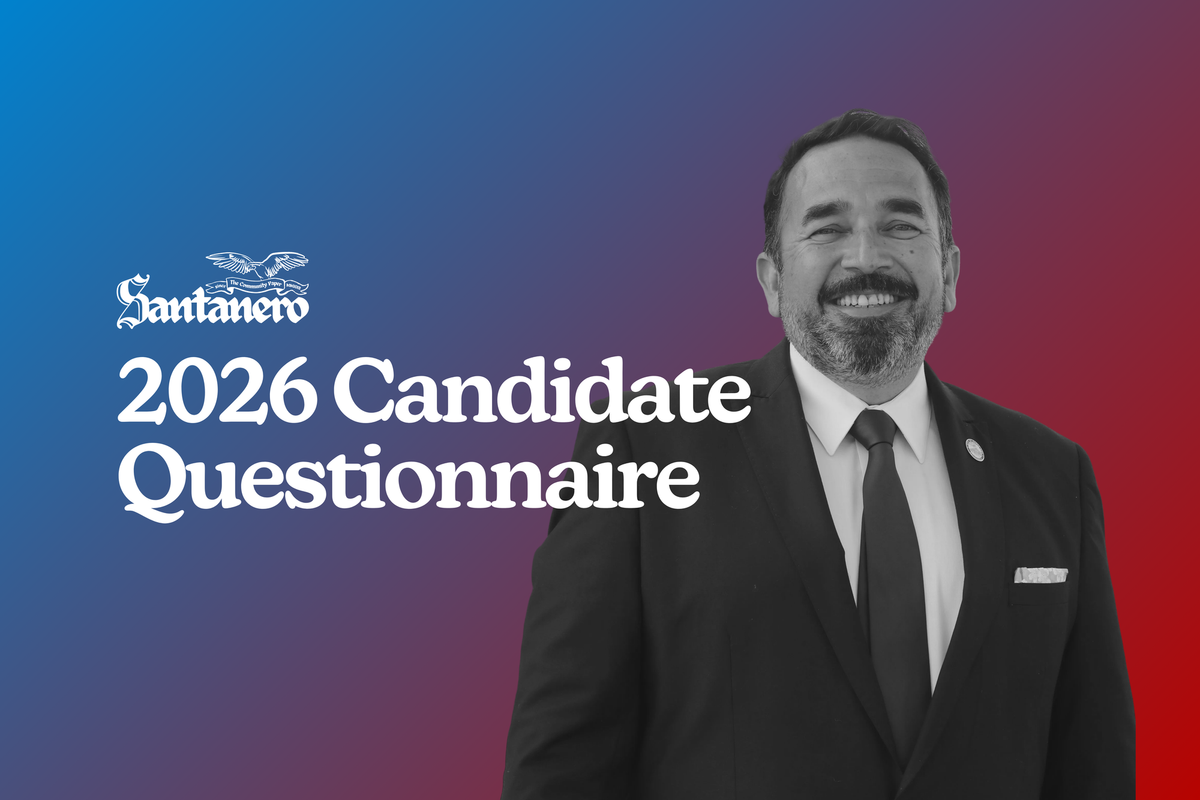
Benjamin Vazquez, 55, is a Santa Ana educator and Ward 2 Councilmember who was first elected to the Santa Ana City Council in 2022.
Vazquez grew up in Santa Ana in a union household with six children. His family did not have much money for sports and other activities, so he spent much of his time at the library, where reading became an important part of his upbringing. He credits those experiences, along with his teachers and the library, with helping shape who he is today.
He attended Monte Vista Elementary, Carr Intermediate and Valley High School before continuing his education at Santa Ana College, California State University Long Beach and UCLA, where he earned a master’s degree in education.
Vazquez has worked as an educator with the Santa Ana Unified School District for more than a decade and teaches at Valley High School. His community involvement has included El Centro Cultural de México and the Santa Ana Educators Association. He has also served as Mayor Pro Tem during his first term on the City Council.
He is running for a second term to represent Ward 2, as candidate Selica Diaz runs against him this November.
Per our policy, The Santanero does not endorse any candidate or ballot measure.
How to read this questionnaire
Questions are grouped by issue. Use the blue search tool below to find a topic or question and jump directly to Vazquez’s full response. The complete wording of each question is preserved so readers can see exactly what the candidate was asked.
A separate section featuring questions submitted by community members can be found near the end of this questionnaire.
Affordable Housing ⬇️
What is your specific plan you'd present to the Council to create additional affordable housing in Santa Ana, excluding only market-rate or luxury developments that designate only a small portion of their units as affordable?
Vazquez: We will work with nonprofit organizations and responsible developers committed to building affordable housing in Santa Ana. While much of the available investment supports market-rate development, we must create a better balance. Vouchers help families remain housed today, but our long-term plan must also include building affordable homes that working families can rent and eventually purchase. Santa Ana residents should have the opportunity not only to stay in their city, but also to build stability and generational wealth here.
AI Data Centers ⬇️
Do you support allowing AI data centers in Santa Ana?
If so, do you believe the City has sufficient water and infrastructure to support them without increasing water rates or reducing water reliability for residents and existing businesses? If a AI data center were proposed, what requirements would you impose on its water use and wastewater discharge?
Vazquez: I do not support AI data centers in Santa Ana. They consume large amounts of water and electricity, could strain our infrastructure, and may increase utility bills for residents and local businesses. Our limited resources should serve our community—not subsidize an industry that provides relatively few permanent jobs.
AI x Police Response ⬇️
The City of Buena Park has opted to use Artificial Intelligence to handle some non-emergency phone calls. Is this an option you see yourself supporting for Santa Ana Police in the future? Why or why not? How would the budget support this?
Correction: The questionnaire originally stated that Buena Park had opted to use AI to handle emergency calls. The program involves certain non-emergency calls. The response below was submitted in response to the original wording of the question and is published as submitted. We regret the error.
Vazquez: I would not support replacing Santa Ana’s emergency dispatchers with artificial intelligence. Emergency calls require human judgment, compassion, language skills, and an understanding of our community. A mistake could cost someone their life.
AI should not be used to eliminate good City jobs. Our budget should prioritize hiring, training, and retaining qualified dispatchers. Technology may assist employees with limited administrative tasks, but it should never replace the trained person answering a resident’s call for help.
Automatic License Plate Readers ⬇️
Automatic license plate readers (ALPRs) have become a subject of debate over privacy and their use or misuse by law enforcement. What is your position on the use of ALPRs in Santa Ana, and how do you defend that position?
This question does not ask you to simply weigh the perceived pros and cons of ALPRs. Please clearly state your position and cite data or evidence that supports it.
Vazquez: I oppose the use of ALPRs in Santa Ana. These cameras collect the locations and movements of thousands of innocent people who are not suspected of any crime. Even a secure system can be abused by individuals or outside agencies.
This danger is not hypothetical. In 2025, records showed that Southern California law-enforcement agencies, including the Orange County Sheriff’s Department, conducted more than 100 license-plate searches on behalf of ICE and Customs and Border Protection in a single month, despite California restrictions. The California Attorney General later sued El Cajon for allegedly sharing ALPR data with federal and out-of-state agencies.
Mass surveillance is a tool of authoritarian government and places immigrant communities at particular risk. I will oppose ALPR deployment in Santa Ana and call for an independent audit of any license-plate data the City currently collects, accesses, or shares.
Budget Participation ⬇️
How would you increase resident participation in Santa Ana’s budget process or in general meetings, particularly among residents who do not typically participate in City affairs? Name specific changes you would encourage.
Vazquez: Receiving only about 1,000 budget-survey responses in a city of more than 300,000 residents is unacceptable. I currently share the survey with students and through social media, but the City must be more creative and proactive.
I would distribute multilingual surveys through schools, libraries, parks, community organizations, neighborhood meetings, City utility mailers, text messages, and in-person events. We should offer paper and online versions, hold budget meetings at different times and locations, and provide childcare and interpretation.
The survey itself must also be fair. In the past, I pushed back when it included nine public-safety questions but only two about youth investment. That structure produces one-sided results and overlooks the fact that investing in youth is itself a public-safety strategy.
Finally, the City should publish participation by neighborhood and age group, identify who is missing, and conduct targeted outreach before closing the survey. Residents must also see how their responses affected the final budget.
Campaign Goal ⬇️
If elected, at the end of your first year of the new term (December 2027), name one concrete result for Santa Ana that you intend to accomplish.
Vazquez: By December 2027, I will establish a dedicated renter liaison in my Council office. This person will help tenants understand rent control and just-cause protections, document complaints, connect families with legal and housing resources, and follow cases until residents receive a response. This is a concrete service my office can deliver while I continue advocating for more parks and a new library center and community center.
Climate Change & El Niño ⬇️
Ward 2 faces significant effects of climate change. With El Niño predicted to be strong this year and summers breaking more records frequently, how proposals would you bring to the Council to consider for Ward 2? Does this include additional trees or sandbag allocation?
Vazquez: Yes. I would propose planting more trees in Ward 2, especially near schools, parks, bus stops, and neighborhoods with the least shade. Trees reduce heat, improve air quality, and lower energy costs.
I would also increase sandbag supplies and establish convenient distribution sites before major storms, with priority assistance for seniors and residents with disabilities. The City should inspect and clear storm drains before the rainy season and identify streets with repeated flooding.
We must also expand cooling centers, shade structures, drinking-water access, and multilingual emergency alerts. Ward 2 deserves year-round preparation for both extreme heat and flooding, not a response that begins after an emergency.
Construction Project Relief ⬇️
Bike lane construction is expected to begin through Ward 2 this year. If elected, how will you advocate for residents and provide relief affected by construction, aside from redirecting to city staff? Do you believe the City is notifying the public enough regarding projects that will ultimately affect them? If not, what do you propose?
Vazquez: I have already directed staff to postpone any project that would remove driving lanes until residents are properly consulted. Many of these projects were approved before I joined the Council, and several moved forward at once without first completing one project and evaluating its effects with the public.
The City is not doing enough to notify affected residents. Before construction begins, I will require multilingual notices, neighborhood meetings, mailed information, clear timelines, and direct outreach to nearby residents and businesses. During construction, the City must maintain driveway and business access, provide clear detours, coordinate schedules, and create one accountable contact for resolving problems quickly.
Now that several projects have been built, the City should return to the community, evaluate what is and is not working, and ask residents what they need before advancing additional projects. I support safer streets and bicycle access, but we should find solutions that accomplish those goals without automatically removing driving lanes or ignoring neighborhood concerns.
Engagement with Youth & Seniors ⬇️
What is your plan to expand youth and senior engagement and ensure more Santanero youth and older adults have a voice in City affairs? Given the City’s fiscal challenges, how would you maintain that engagement if funding for new programs or initiatives is limited?
Vazquez: The City should hold separate youth and senior listening sessions once each year before the budget process begins. This would allow their priorities to directly inform City spending decisions.
City staff, including trained community organizers, should conduct multilingual outreach and hold sessions in accessible locations throughout Santa Ana. The City must publish what it heard, identify which recommendations are included in the proposed budget, and explain why others were not.
Even with limited funding, the City can use existing staff and public facilities while partnering with schools and community organizations to reach more residents. The City must remain responsible for the process and its follow-through.
Gang Violence x Police Response ⬇️
Over the past 35 years, the City has allocated billions of dollars in cumulative taxpayer spending toward policing, including funding for gang enforcement efforts intended to combat gang violence. Despite these investments, gang-related homicides remain a serious concern. While there are many factors surrounding gang violence, if elected, what specific directives will you bring to the dais to prevent and reduce gang violence in Santa Ana?
Note: This question is not asking to solely identify or list the underlying causes of gang violence. Please focus your response on the actions you would take if elected.
Vazquez: If reelected, I will direct the City to develop a joint youth-violence prevention plan with SAUSD, community organizations, parents, and young people. The plan must identify gaps in each neighborhood and coordinate services instead of allowing agencies to work separately.
I will propose expanding after-school, evening, and weekend access to libraries, parks, recreation centers, and school facilities. I will also prioritize funding for youth employment, mentorship, mental-health services, conflict intervention, and programs led by trusted community organizations.
Housing must be part of the strategy. When two or three families are crowded into one home, stress increases and young people often seek space elsewhere. I will continue supporting affordable housing, rent protections, and assistance that keeps families stable.
Finally, I will require annual public reporting on gang-related violence and program outcomes. We have spent billions reacting to violence. We must invest earlier in the housing, opportunities, and safe spaces that prevent it.
Green Space x Youth Sports ⬇️
City parks are a central part of life for many Santaneros, particularly our youth. Do you believe the current process for reserving and renting park space provides fair and equitable access to residents, youth organizations, sports leagues, and community groups? Why or why not?
What, if anything, would you encourage the City to change about the current process? Is part of your solution to build more parks? If so, how will that be paid for given budget difficulties?
Vazquez: The current process cannot be fully equitable when Santa Ana does not have enough park space. Only about 3.2% of our land is dedicated to parks, compared with roughly 15% in many cities. That shortage creates competition among residents, youth organizations, sports leagues, and community groups.
The City should make reservations more transparent, publish availability, prioritize Santa Ana residents and youth programs, and offer reduced fees for nonprofit community groups.
Yes, building more parks is part of the solution, but Santa Ana is built out and faces budget constraints. We should pursue state and federal grants, park-development fees, and partnerships with developers. We must also establish shared-use agreements with SAUSD to open school fields, playgrounds, and recreation areas after school and on weekends. This would expand access more quickly and affordably while we continue creating permanent park space.
Homelessness Response ⬇️
The City’s approach to homelessness combines outreach and offers of assistance with enforcement of applicable laws and ordinances. Yet some individuals continue to cycle between homelessness, arrest, release, and a return to the streets. Do you believe the City’s current approach is effective for individuals caught in this cycle? Why or why not, and what, if anything, would you propose as the next steps?
Vazquez: The arrest-and-release cycle is not effective because it returns people to the street without addressing why they are homeless. Before the current enforcement-focused approach, Santa Ana emphasized services, healthcare, shelter, and placement into permanent housing. During that period, our unhoused population dropped by approximately 15%.
We should continue what was working: consistent outreach, shelter access, mental-health and addiction treatment, housing vouchers, and permanent supportive housing. We must also prevent homelessness before it begins by protecting rent control, providing emergency rental assistance, and helping families remain housed.
Enforcement may temporarily move people out of sight, but it does not solve homelessness. Our success should be measured by how many people remain permanently housed not by how many arrests or encampment clearings occur.
Editor’s Note: The approximately 15% decrease cited by Vazquez refers to a City of Santa Ana count of people sleeping on the streets, which declined from 592 in 2024 to 501 in 2025. Orange County’s 2026 Point-in-Time Count uses a separate methodology and counted 1,315 people experiencing homelessness in Santa Ana, including 714 unsheltered and 601 sheltered people.
Immigration
Reflection on June 2025 ⬇️
You were serving as Ward 2 Councilmember when federal immigration enforcement actions intensified in Santa Ana in June 2025 and residents took to the streets in response. Criticism from some members of the community was aimed at the City Council and City staff. Do you believe that criticism was fair? Looking back, do you believe your response was timely and sufficient? Why or why not, and what, if anything, would you have done differently or sooner?
Note: This question asks you to evaluate your individual response and leadership as Councilmember before and during the June 2025 immigration enforcement actions. Please distinguish your own actions from those taken by the City Council or City as a whole.
Vazquez: The community’s fear and frustration were real, and residents had every right to demand more from their elected officials. I acted, but in a crisis of that size, no response should be considered sufficient.
Before the June 2025 actions, I supported increasing Santa Ana’s Universal Legal Defense Fund. During the crisis, I supported City assistance for families affected by immigration enforcement. I also organized two events that raised $18,000 for nonprofits helping impacted families, held a defense workshop so educators would know what to do if immigration agents approached a school, and marched with the community so residents knew their councilmember stood with them.
Looking back, I could have pushed sooner for clearer and faster communication from the City, more coordinated emergency assistance, and greater funding for legal defense. The work must continue. I will advocate for another increase to the defense fund during the midyear budget process.
I also support an independent review of how police responded to protesters, with findings and recommendations presented through the Police Oversight Commission. Santa Ana should learn from successful practices across the country while supporting state efforts to protect immigrant communities.
Where Were You? ⬇️
A consistent question asked is "Where were you?" On the morning of June 9, 2025, ICE began their warrantless raids across Santa Ana and surrounding cities. According to your calendar, you completed social media content. Can you elaborate on this? The next day, you were present at an event at the Public Law Center. Where were you the morning of and rest of day on June 9 and for the rest of that week?
Vazquez: On the morning of June 9, I was in my classroom with students who were terrified about what was happening to their families and community. The social media work listed on my calendar was part of getting timely information and know-your-rights resources to residents, not a substitute for being present.
After leaving the classroom, I met with colleagues, City staff, and community organizers to discuss how we could protect and support undocumented residents. We researched ways to help, distributed self-defense and know-your-rights cards, and printed signs informing local businesses that immigration agents were not permitted in private areas without proper legal authority.
I ended that day in the streets, protesting alongside residents and experiencing the tear gas used against the crowd. Throughout the rest of the week, I continued meeting with organizers, sharing verified information, supporting their work in the streets, and connecting residents with available resources. I was present both as a councilmember and as a teacher standing with a frightened community.
Response Prior to ICE Crackdown ⬇️
What actions had you taken to support Santaneros affected by immigration enforcement before June 2025?
Future plans or general statements of support do not answer this question.
Vazquez: My support for undocumented Santaneros began long before June 2025. For many years, I supported the OC Dream Team and worked alongside undocumented youth and families at El Centro Cultural de México. I marched on May 1 to demand that Santa Ana become a sanctuary city, and I publicly called for abolishing ICE, a position I continue to hold.
As a councilmember, I supported increasing the City’s immigration legal-defense funding to provide greater assistance to residents facing deportation and federal enforcement. My record includes years of organizing, marching, advocacy, and direct work with undocumented families, not just statements made after the raids began.
Position on ICE ⬇️
What is your position on ICE today? Do you believe ICE should be abolished, reformed, or kept as is?
Note for the second part of this question, you must select one of three options only and explain why.
Vazquez: ICE should be abolished. It has been used as a weapon of fear and tyranny against immigrant communities, separating families and denying people basic dignity and due process. Our country needs a humane immigration system that protects families and respects human rights, not an agency that terrorizes the communities it claims to serve.
Measure N Outcome ⬇️
If voters choose not to continue the Measure X sales tax rate past 2029, how would you address the resulting impact on the City’s budget?
Identify specific services or spending you would reduce, revenues you would pursue, or other actions you would take to balance the budget.
Vazquez: If voters choose not to continue Measure X, I will respect that decision. I would require every City department to share in proportional budget reductions instead of placing the entire burden on one service or group of employees. We should first reduce administrative costs, unnecessary contracts, travel, and other nonessential spending before cutting frontline services.
At the same time, I would pursue grants, increase hotel-tax revenue, fill vacant storefronts, strengthen economic development, and improve fee collection. The process must be public and transparent, with residents helping identify priorities. We will have to live within our means while protecting essential services as much as possible.
Officer-Involved Shooting Outcomes ⬇️
When someone is killed by law enforcement—whether armed or unarmed—or when a bystander dies as an unintended result of police action, the circumstances and legal findings can vary significantly. Yet families may still feel powerless when investigations, appeals and other legal processes result in no criminal or civil liability, particularly when the person killed was unarmed or an innocent bystander. Some may believe the system provides law enforcement greater protection than accountability. Do you believe that concern is justified? What is your role, if elected, as Councilmember, when a family believes the accountability system has failed them, and how do these cases affect public trust in policing?
What role should Santa Ana’s Police Oversight Commission have, and would you expand, limit or maintain its current authority? Be specific.
Vazquez: Yes, that concern is justified. When someone is killed and the family receives little information or no clear accountability, public trust is damaged, regardless of the final legal finding.
A councilmember cannot decide criminal guilt, but we can demand transparency, ensure investigations are independent, review Police Department policies, fund ongoing de-escalation training, and make sure families receive timely information and a meaningful opportunity to be heard. The City should assign families a liaison so they are not forced to navigate the system alone.
I would strengthen and expand the Police Oversight Commission. It must receive adequate funding, independent staff and legal counsel, and access to records allowed by law. It should independently review police shootings, deaths involving officers, serious uses of force, and complaints; publicly report its findings; and recommend policy changes and discipline when appropriate. It should also have subpoena authority to the fullest extent legally permitted and track whether its recommendations are implemented.
Oversight cannot exist only on paper. It must operate consistently, independently, and with enough resources to investigate serious incidents and earn public trust.
Parking ⬇️
Parking is a longstanding issue in Santa Ana. What is your plan to fix it?
Note: Weighing the pros and cons of permit parking is not an answer to this question.
Vazquez: Permit parking frees up space for people who live in the neighborhood and on the street. Unfortunately, it does not have space for apartment renters to use. I would like to investigate the use of overnight parking in city lots and parks. I additionally would recommend that we work with the school district to use school site parking by permit to 6:30am.
Public Transportation ⬇️
Santa Ana has a significant number of residents who rely on public transportation. What is your short-term plan to support and improve public transportation in the city?
What additional transit services or changes, if any, should the City pursue or advocate for with OCTA to accommodate increased transportation needs during the Olympics and other major events?
Vazquez: In the short term, I will focus on making public transportation safer, more reliable, and easier to use. That means working with OCTA to increase bus frequency on heavily traveled routes, improve connections between neighborhoods, schools, jobs, and the OC Streetcar, and provide safer bus stops with lighting, shade, seating, and accessible sidewalks. The City should also expand affordable first-and-last-mile options, including community shuttles, and safe walking routes.
Rent Control ⬇️
The Costa-Hawkins Rental Housing Act limits the ability of California cities to apply rent control to certain properties, including many newer rental units. Do you support amending or repealing Costa-Hawkins to give cities greater authority to determine which rental properties may be subject to rent control? Why or why not?
If reelected, what would you propose to the Council on this specifically?
Vazquez: I support repealing or amending Costa-Hawkins so cities can create rent-control policies that meet their communities’ needs. Santa Ana families are being priced out of the city they helped build, and state law should not prevent us from protecting them.
If reelected, I will propose that the Council formally support state legislation to repeal or reform Costa-Hawkins and make this part of the City’s legislative platform. I will also continue defending and strengthening Santa Ana’s rent-control and just-cause eviction protections, improving enforcement, and ensuring tenants know their rights. Housing is a basic need, and working families deserve stability.
Resident Advocacy ⬇️
Residents can spend years advocating for neighborhood improvements. What system would you put in place to ensure resident requests are tracked, receive a response, and don't go unreviewed? Would you support a dedicated liaison, public request form or tracking system, or another solution? Be specific.
Vazquez: I read and respond to every constituent email. Early in my term, I would simply forward concerns to City staff. I changed that practice so residents now receive an acknowledgment from my office while we work with staff toward a solution. I also began holding office hours and attend neighborhood association meetings whenever possible; when I cannot attend, my chief of staff participates, takes notes, and follows up.
I support creating a formal constituent tracking system. Every request should receive a case number, assigned staff member, response deadline, and regular status updates. A case should not be closed until the resident receives an explanation of what was done or why the request could not be completed.
I am also dividing staff hours specifically for constituent services and hiring a second staff member focused on rent-control and renter concerns. My office will continue helping residents research grants, organize events, and navigate City services. Residents should never have to start over because their request was lost or ignored.
Small Business Support ⬇️
Given the city's budget forecast, how do you plan to boost economic activity and support the growth and sustainability of small businesses throughout the city? If reelected, what would you propose to the Council for consideration?
Vazquez: If reelected, I will call for expanding and strengthening our economic development team and expecting greater creativity from City staff. The permit counter should help entrepreneurs succeed, not simply send them away each time one issue is found. Applicants should receive a complete list of corrections, a clear timeline, and one point of contact so they can open quickly and efficiently. Santa Ana must be a business-friendly city, especially for small and locally owned businesses.
I will also propose a strategy to increase hotel stays and Transient Occupancy Tax revenue. This means identifying the infrastructure, attractions, cultural events, and partnerships needed to bring more visitors to Santa Ana and fill our existing hotels. Stronger small businesses and more visitors will create jobs and generate revenue for essential City services.
Special Interests vs. Residents ⬇️
When your personal, political, or financial interests conflict with the concerns of the community, what specific actions or standards will you follow to ensure that you prioritize the residents you were elected to serve? Note: A general pledge or assurance that you will “put residents first” does not answer this question. Please identify the specific standards, safeguards, or actions you would follow when such a conflict arises.
Vazquez: My standard is working families first. When a potential conflict arises, I will disclose it publicly, seek written guidance from the City Attorney or Fair Political Practices Commission, and recuse myself from discussion and voting whenever required. I will not use City staff, information, or resources for personal, political, or financial benefit.
When the conflict is political rather than legal, I will meet directly with the residents most affected, disclose any relationship or campaign support involved, review the public evidence, and explain my decision on the record.
I am accountable to the families I serve through SAUSD, Santa Ana’s working people, the activist community that helped elect me, and my own family. Their expectation is simple: do what is right, even when it is politically inconvenient.
Stigma of Santa Ana Being "Ghetto" ⬇️
There is a longstanding stigma that living in Santa Ana means living in “the ghetto”—that it is a place people work hard to get out of, sometimes moving to the Inland Empire or elsewhere and viewing that departure as a sign that they have “made it.” Do you believe that perception still exists? What do you think has contributed to it, and what can you do as an elected official to help make Santa Ana a city where residents are proud not only to come from, but to stay, build a career, raise a family and invest in their community?
Vazquez: Yes, that perception still exists, although it does not reflect the Santa Ana of today. When I was growing up, our city experienced serious violence, and we still have work to do on public safety. But Santa Ana is not the same city it was in the early 1990s. Years of negative media coverage, disinvestment, and even rhetoric from our own leaders have allowed an outdated image to continue. The mayor was not initially the strong ambassador our city needed, although her approach has improved.
City leaders must proudly tell Santa Ana’s story. We should have a videographer and stronger public-relations team consistently highlighting our cultural heritage, local businesses, artists, students, neighborhoods, and community achievements.
Changing the narrative also requires results. We must create affordable housing, good jobs, safer neighborhoods, quality parks and libraries, and opportunities for young people. Success should not mean having to leave Santa Ana. It should mean residents can build a career, purchase a home, raise a family, and invest in the community that invested in them.
Vacancy Tax ⬇️
Would you support establishing a vacancy tax on residential or commercial properties that remain vacant for extended periods? Why or why not, and what exemptions, if any, should apply?
Vazquez: Yes. During a housing crisis, we cannot afford to leave homes, storefronts, and lots vacant for years. Long-term vacancies reduce housing opportunities, hurt nearby businesses and neighborhoods, and cost the City potential tax revenue.
I would support a carefully designed vacancy tax that targets prolonged, intentional vacancies, not owners facing legitimate hardships. Exemptions should include active construction or permitting, major repairs, disaster damage, probate, medical hardship, and properties actively being offered for rent or sale at a reasonable market price. Revenue should support affordable housing and the revitalization of struggling business corridors.
Youth Programs Expansion ⬇️
Both the City and school district face significant budget challenges in the coming years. While education is primarily the responsibility of the school district, the City also provides libraries, recreational facilities, and other resources used by Santa Ana youth. How would you collaborate with the school district to make efficient use of limited resources while maintaining services for youth?
What more, if anything, should the City do to expand students’ access to studying spaces, programs, and resources outside of school?
Vazquez: Santa Ana has roughly one public library for every 100,000 residents, while many cities average about one for every 40,000. I have made expanding library access a priority during my first term, including advocating for community centers in neighborhoods where a full library is not yet possible.
Libraries are more than reading spaces. They provide students with safe places to study, internet access, tutoring, technology, and educational programs. Literacy also supports economic development: a better-educated workforce attracts industries that provide better-paying jobs.
With limited budgets, the City and SAUSD should establish shared-use agreements to open school libraries and other facilities to the public after school, during evenings, and on weekends. By sharing facilities, staffing, technology, and programming, we can reduce duplication while expanding services. Every Santa Ana student should have a safe and accessible place to learn outside the classroom, regardless of which neighborhood they live in.
Zoning Code Update ⬇️
The Planning Commission approved an updated zoning map that changes the terminology used to designate certain residential areas, including placing some existing multifamily apartment communities under a Low Density Residential designation, like Townsend-Raitt. While the City has stated that this change does not rezone properties or displace existing residents, do you support this terminology?
Why or why not, and what concerns, if any, do you have about how this designation could affect these communities in future land-use or redevelopment decisions? What protections are or ought to be in place if residents are asked to leave due to redevelopment?
Vazquez: I do not support terminology that labels existing multifamily apartment communities as “Low Density Residential” if it fails to reflect how residents actually live there. Even if the City says this change does not immediately rezone properties or displace tenants, the language on a zoning map can influence future land-use and redevelopment decisions. Communities such as Townsend-Raitt should not be placed at greater risk of demolition, displacement, or gentrification because of a technical designation residents did not request. The term, low density residential, needs to be defined in the plan to mirror the current neighborhood.
Santa Ana needs new housing, but development must not come at the expense of working families who already call these neighborhoods home. Before approving any redevelopment, the City should require meaningful community participation and study its potential displacement impacts.
If residents are required to leave, protections should include adequate relocation assistance, sufficient notice, moving expenses, temporary housing support, and a guaranteed right to return at a rent they can afford. Redevelopment should provide one-for-one replacement of affordable units, with no net loss of affordable housing. Our rent-control and just-cause protections must also be fully enforced.
City planning should improve neighborhoods without removing the people who built them. Development without strong protections becomes displacement, and displacement is not progress.
Questions from the Community
These questions stem from a submission form posted on The Santanero's Instagram.
Do you support or oppose continued military aid and financial aid to countries outside the United States? Why?
Vazquez: I oppose continued military aid and blank checks to foreign governments, especially when that funding supports war, occupation, or human-rights violations. Those resources could better serve working families here in Santa Ana through housing, education, healthcare, libraries, parks, and youth programs.
I distinguish military funding from humanitarian assistance that provides food, medicine, and disaster relief directly to civilians. I support freedom, dignity, and self-determination for the Palestinian people: Free Palestine.
Do you believe Israel is committing a genocide in Palestine? What is the basis for your position?
Vazquez: Yes. I believe Israel is committing genocide against Palestinians in Gaza. My position is based on the mass killing of civilians, forced displacement, destruction of homes and essential infrastructure, restriction of food and humanitarian aid, and statements of intent by Israeli officials.
This conclusion is also supported by international findings. In September 2025, the UN Independent International Commission of Inquiry concluded that Israel had committed genocide in Gaza, including four of the five genocidal acts defined under international law. The UN Special Rapporteur had previously found reasonable grounds to believe the threshold for genocide had been met.
The International Court of Justice case remains ongoing and has not reached a final judgment, but the evidence already presented is enough for me to say clearly: this is genocide, and it must end.
Residents sometimes ask the City Council to act on issues outside the City’s direct authority, including through resolutions, letters, or advocacy to state and federal officials. When, if ever, should the Santa Ana City Council take such action?
Vazquez: I have no concern using the Council’s voice to support our residents when the issue directly affects them. Whether the concern involves immigration, housing, education, workers’ rights, public health, or human rights, silence is also a decision. We can advocate beyond City Hall while continuing to fulfill our responsibility to deliver effective local services.
Do you believe Santa Ana is experiencing gentrification? Why or why not?
Vazquez: Yes, Santa Ana is experiencing gentrification. Rents have risen beyond what many working families can afford, forcing some residents to leave and others to crowd two or three families into one home. SAUSD’s major enrollment decline is another warning sign that families with children are being displaced from the community.
Investment itself is not the problem. The problem is development that raises costs while replacing the residents, small businesses, and culture that made Santa Ana valuable. That is why we need rent control, just-cause eviction protections, affordable housing, homeownership opportunities, and strong anti-displacement requirements for redevelopment.
Red or green pozole?
Vazquez: Red pozole.
What is your favorite food?
Vazquez: My mom's enchiladas, both green and red.
What is your astrological zodiac sign?
Vazquez: Aquarius (Jan 20 - Feb 19)
Spotlight a Santanero business or place!
Editor's Note: If the selected place, its owner, or business has donated to or endorsed your campaign, an editorial note will disclose that relationship.
Vazquez: LibroMobile Bookstore (1150 S Bristol St, Unit A3, Santa Ana, CA 92704)
My favorite thing about Santa Ana is...
Vazquez: The people, all Santaneros.
Why should voters give you a chance?
Vazquez: Voters should give me another term because everything I do is centered on working families and children—and my record shows results. Take a walk with me down Bristol Street. You will see a safer walking path and the new Salvador Quintana Park, in an area that looked very different when I first took office and was filled with encampments.
We did not simply move people from one street to another. We expanded outreach, shelter, services, and pathways to permanent housing, helping reduce Santa Ana’s unhoused population by approximately 15%.
I am not finished. I want to continue building parks and libraries, protecting renters, investing in young people, and making every neighborhood safer. I ask voters to judge me by whom I fight for and what we have accomplished together.