Isuri S. Ramos on the Issues: Santa Ana City Council Ward 6

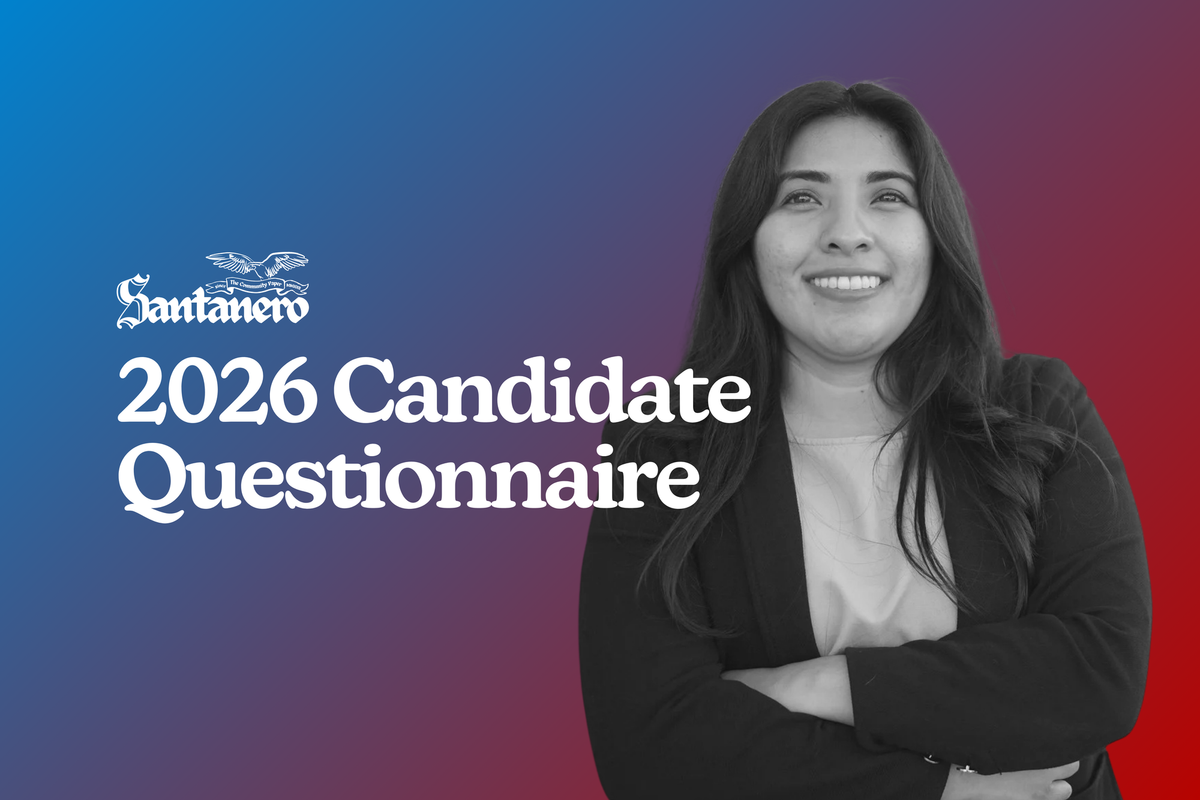
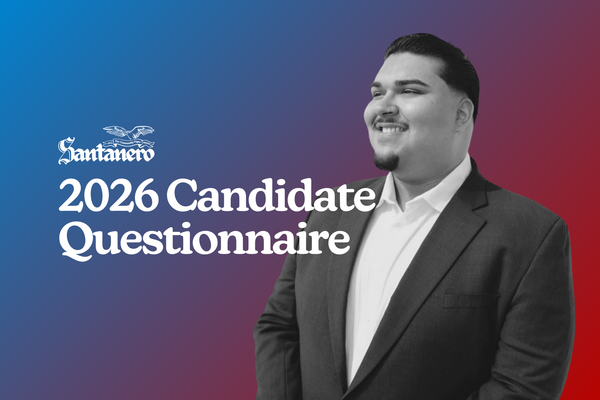
Isuri S. Ramos, 33, is a lifelong Santa Ana resident, born and raised in the city. The daughter of Mexican immigrants, Ramos grew up on Minnie Street in a family that relied on public transportation and city services and, at one point, lost its home.
Ramos says Santa Ana’s public spaces and programs played an important role in her upbringing. She spent time at the public library and boxed at the Jerome Center, where she says the boxing program provided structure and discipline. She credits those experiences, along with educators in Santa Ana public schools, with shaping her interest in community organizing and urban planning.
She attended Wilson Elementary, Willard Intermediate and Santa Ana High School, graduating in 2011. She earned bachelor's degrees in Urban Planning and International Studies–Political Science from UC San Diego in 2016 and attended Harvard Executive Education in 2019.
She is also the executive director of Chispa and currently chairs the Santa Ana Planning Commission, where she has served since 2021. Her previous public service includes chairing the Housing Commission, serving on the Historic Resources Commission and serving as vice chair of the Youth Commission. She has also worked as a Santa Ana Youth & Government advisor and volunteered as a counselor for Santa Ana Camp Catalina.
Ramos is running for Santa Ana City Council Ward 6 after incumbent David Penaloza chose to run for a statewide office. Also in the running, Giovanni Chavez.
Per our policy, The Santanero does not endorse any candidate or ballot measure.
How to read this questionnaire
Questions are grouped by issue. Use the blue search tool below to find a topic or question and jump directly to Ramos' full response. The complete wording of each question is preserved so readers can see exactly what the candidate was asked.
A separate section featuring questions submitted by community members can be found near the end of this questionnaire.
Affordable Housing ⬇️
What is your specific plan you'd present to the Council to create additional affordable housing in Santa Ana, excluding only market-rate or luxury developments that designate only a small portion of their units as affordable?
Ramos: My career has been dedicated to increasing meaningful and inclusive affordable housing across Santa Ana and that dedication will continue when elected to the city council. Building affordable housing for families of all sizes who call Santa Ana home is a key priority for me, and something very personal for me.
I will prioritize strengthening our city’s inclusionary housing policy to incentivize developers to build more affordable housing units on site. Our families need more than just a token number of affordable housing units in new market-rate developments.
Nearly 10 years as a Housing Commissioner I strengthened language in the city’s request for proposals to truly encourage and incentive developers to provide units at the lowest rents and larger unit sizes to qualify more families. It was this language that helped get the deep affordability we now see at developments like Crossroads at Washington and Legacy Square, both in Ward 6. I will bring that same standard to the Council, requiring genuinely affordable housing.
AI Data Centers ⬇️
Do you support allowing AI data centers in Santa Ana?
If so, do you believe the City has sufficient water and infrastructure to support them without increasing water rates or reducing water reliability for residents and existing businesses? If a AI data center were proposed, what requirements would you impose on its water use and wastewater discharge?
Ramos: No, I do not support allowing AI Data Centers in the City. As Chair of the Planning Commission I added an explicit ban on Data Centers in the Zoning Code Update recommendation that was sent to the City Council. If approved as recommended, new Data Centers would not be allowed in Santa Ana.
AI x Police Response ⬇️
The City of Buena Park has opted to use Artificial Intelligence to handle some non-emergency phone calls. Is this an option you see yourself supporting for Santa Ana Police in the future? Why or why not? How would the budget support this?
Correction: The questionnaire originally stated that Buena Park had opted to use AI to handle emergency calls. The program involves certain non-emergency calls. The response below was submitted in response to the original wording of the question and is published as submitted. We regret the error.
Ramos: No, I would not support this. There are duties and functions that AI will never be able to do in place of a human. I think responding to emergency calls is one of them. Especially in those moments when every second counts, a person needs care, responsiveness, support, and real feedback, not a robot capturing key information.
Cities have long survived on well-built budgets, fully staffed and resourced public safety and emergency response departments, including dispatch, long before AI existed. While AI adoption is being pushed in many areas, responding to 911 calls shouldn’t be one of them — that’s a child needing help, a parent needing comfort or CPR support, or a person who needs immediate emergency response. Human interaction in those moments can be everything and should be paramount. I'm not prepared to commit to this type of cut to our law enforcement and community support.
Automatic License Plate Readers ⬇️
Automatic license plate readers (ALPRs) have become a subject of debate over privacy and their use or misuse by law enforcement. What is your position on the use of ALPRs in Santa Ana, and how do you defend that position?
This question does not ask you to simply weigh the perceived pros and cons of ALPRs. Please clearly state your position and cite data or evidence that supports it.
Ramos: I do not support ALPRS in Santa Ana. I have called on the City Council to cancel its existing contracts with Flock and Motorola and to not enter into any new contracts with surveillance technology.
The City Council has failed to provide the oversight it promised, they promised an audit at the one year mark of their contract approval and that has yet to happen; despite it being nearly 5 months overdue. It has also been reported by journalist Ben Camacho that the City’s Flock data was accessed by federal agencies, in violation of CA State Law.
I don’t believe the perceived benefits of ALPRs outweighs the privacy concerns, the concerns of surveillance, the concerns of illegal data sharing and I can’t believe that because of everything we’ve seen to date.
Budget Participation ⬇️
How would you increase resident participation in Santa Ana’s budget process or in general meetings, particularly among residents who do not typically participate in City affairs? Name specific changes you would encourage.
Ramos: I would push for budget meetings held in neighborhoods themselves, not just at City Hall, with real multilingual outreach and non-traditional hours that accommodate working families. Participatory budgeting, letting residents directly weigh in on a portion of spending, is a concrete way to build real participation. Public hearings and a survey that few fill out are not enough. We need to meet residents where they are and design an outreach process that reflects that.
My record of community organizing proves I've always done this work with the community beside me, because that's how you build real solutions to real problems. Governing from a dais isn't the way. Community first, always.
Campaign Goal ⬇️
If elected, at the end of your first year of the new term (December 2027), name one concrete result for Santa Ana that you intend to accomplish.
Ramos: By the end of my first year, I want to have reconvened the City’s Sanctuary Advisory Board. Santa Ana is a Sanctuary City and we must proactively ensure we’re upholding that. The Advisory Board will convene immigration experts to provide the necessary guidance to make immediate changes rather than waiting months or years as was the case with the revisions to the City’s U-Visa policy.
Cost of Groceries ⬇️
Your opponent pointed out the high cost of groceries in a social media post. What specific authority or actions, if elected as Ward 6 Councilmember, would you use to make groceries more affordable? If you do not believe the City Council can meaningfully affect grocery prices, what other avenues can be paved? Be specific.
Ramos: There is real, concrete action a city can take to bring relief to residents struggling to afford groceries. I support exploring city-owned grocery store options in food desert areas, where residents are stuck paying inflated prices simply because they have no other choice nearby.
I also support the city actively promoting and supporting local farmers markets, giving families direct access to fresh, affordable food outside the grip of big chains.
I believe the Council should regulate and monitor price gouging at every level, because big stores and big industry hike prices while working families are the ones who pay for it.
Simple, effective solutions matter here: reducing the cost of housing, transportation, and utilities also frees up more of a family's budget for groceries, and expanding access to food assistance programs gives families a direct safety net when prices climb faster than paychecks do.
Affordability isn't one single fix. It's every tool the city has, used together, so working families aren't the ones absorbing the cost of someone else's profit.
Construction Project Relief ⬇️
If elected, how will you advocate for residents and provide relief affected by construction, aside from redirecting to city staff? Do you believe the City is notifying the public enough regarding projects that will ultimately affect them? If not, what do you propose?
Ramos: The city can provide more proactive notification. Residents deserve mandatory, multilingual notice before construction begins on their block. Major projects disrupt commutes, school schedules, and daily routines, and disorganized traffic around construction sites increases the risk of collisions, putting both schedules and safety at stake. The more prepared our community is, the safer and more efficient it becomes for everyone. As a Councilmember, I will engage directly with affected residents, not just redirect them to staff, and advocate for real mitigation, compensation or service adjustments, when construction significantly disrupts daily life.
Engagement with Youth & Seniors ⬇️
What is your plan to expand youth and senior engagement and ensure more Santanero youth and older adults have a voice in City affairs? Given the City’s fiscal challenges, how would you maintain that engagement if funding for new programs or initiatives is limited?
Ramos: I would prioritize low-cost, high-impact engagement: youth advisory boards and senior councils that don't require new funding to run, just real, consistent city commitment to listening. I believe in leveraging existing community spaces, like libraries and parks, for these conversations rather than creating costly new programs we can't sustain. We need to meet youth and seniors where they are.
Campaign & Council Ethics ⬇️
Your opponent or his team blocked you and other individuals from his campaign social media accounts after they questioned or challenged his political positions or campaign promises. While a campaign account is distinct from an official City account, how can constituents who disagree with you expect to communicate openly with you if you are elected? Have you blocked anyone during the campaign so far? What would your policy be regarding blocking or restricting constituents from your official social media accounts?
Ramos: No one is blocked from my campaign social media accounts. I welcome discourse on my accounts and engage with the questions others would ignore. I do this because I uphold the expectation of me to be responsive, even when people don’t agree with me. My constituents and the public at large have appreciated this of me and have rightfully been very critical of my opponent’s campaign blocking City residents who ask questions about his positions on different issues.
If elected, my policy will be to keep official communication channels open to all constituents, including those who disagree with me. Disagreement is part of representing a community honestly. As candidates, we must embrace this now. Once elected, we cannot pick and choose who we serve, we will have to represent all our constituents, including those who don’t agree with us.
Gang Violence x Police Response ⬇️
Over the past 35 years, the City has allocated billions of dollars in cumulative taxpayer spending toward policing, including funding for gang enforcement efforts intended to combat gang violence. Despite these investments, gang-related homicides remain a serious concern. While there are many factors surrounding gang violence, if elected, what specific directives will you bring to the dais to prevent and reduce gang violence in Santa Ana?
Note: This question is not asking to solely identify or list the underlying causes of gang violence. Please focus your response on the actions you would take if elected.
Ramos: Directing real investment toward the root causes that policing alone hasn't solved is the best use of our time and resources: youth mentorship and structured programs, like the boxing club that gave me discipline as a kid, and real economic opportunity in the neighborhoods most affected. I know firsthand what happens when young people lose access to the structure and mentorship that keeps them on a better path. We need to explore expanding its partnerships with community-based violence intervention programs, not just increase policing budgets that haven't solved this after 35 years. It’s not about more enforcement. It’s about more opportunities.
Green Space x Youth Sports ⬇️
City parks are a central part of life for many Santaneros, particularly our youth. Do you believe the current process for reserving and renting park space provides fair and equitable access to residents, youth organizations, sports leagues, and community groups? Why or why not?
What, if anything, would you encourage the City to change about the current process? Is part of your solution to build more parks? If so, how will that be paid for given budget difficulties?
Ramos: Shared public spaces like parks should never be a mechanism for profit. While parks require maintenance, and teams and larger organizations can certainly contribute to the upkeep of the facilities they use, that process has to be genuinely equitable, not just open to whoever has the staff, time, and money to book first.
Many young people rely on little league or softball to grow into the athlete who earns a scholarship to college. These extracurricular activities should be supported, not hindered by a process that makes it hard for us to show up for our youth. It is also important that we don’t lock people out of our parks by entering into exclusive agreements with any one entity, like certain Councilmembers attempted to do and were ultimately blocked from doing when residents and families self organized.
I would push for a transparent, standardized system with real outreach to youth organizations and community groups who may not know how to navigate the current process, so smaller, under-resourced groups aren't crowded out by those with more capacity to reserve space early and often. On building more parks, I've already proven this is possible. I helped secure Mariposa Park, and any new park investment I support would need to come from the same accountable revenue sources that don't burden residents already stretched thin.
Homelessness Response ⬇️
The City’s approach to homelessness combines outreach and offers of assistance with enforcement of applicable laws and ordinances. Yet some individuals continue to cycle between homelessness, arrest, release, and a return to the streets. Do you believe the City’s current approach is effective for individuals caught in this cycle? Why or why not, and what, if anything, would you propose as the next steps?
Ramos: No, I don't believe the current cycle of enforcement without adequate services is effective. Citations and arrests don't address why someone is unhoused in the first place, they just delay the same crisis to a later date. I support directing resources toward permanent supportive housing paired with mental health care, addiction treatment, and case management, so people are moved toward stability, not cycled through the system repeatedly. We need to provide the services and programs that get people off the street and back on their feet.
Immigration
Reflection on June 2025 ⬇️
Federal immigration enforcement actions intensified in Santa Ana in June 2025 and residents took to the streets in response. What action did you take to support immigrant Santanero families then and prior? Do you believe your response was sufficient? What could you have done differently or sooner?
Note: This question asks you to evaluate your individual response before and during the June 2025 immigration enforcement actions.
Ramos: I want to start by saying part of the reason I’m running is that the City of Santa Ana failed to prepare for the promises of mass deportation made by the Trump Administration. Failed in its immediate response to the ICE raids last year. And continues to fail by allowing Flock Cameras to surveil our residents in our city. Councilmembers Lopez proposed reconvening the Sanctuary Advisory Board early in 2025 and it was disappointing to see that a majority of the council voted against it.
Like many Santa Ana residents who had to contend with the initial shock of the raids, and the personal worry for loved ones, I believe I did what I could to respond in every way available to me. As Executive Director of Chispa, it was my job to ensure the safety of our members and staff, to launch Know Your Rights Canvasses in vulnerable neighborhoods (which are still ongoing), to support partner immigrant rights organizations coordinating the bulk of the community response, and to help mobilize residents to hold the city accountable for its response.
City's Response to Immigration ⬇️
Do you believe the City's response to immigration enforcement was sufficient or not enough in June 2025? Why? Has the City done enough in the time since? If elected, what would you propose the Council to do moving forward?
Ramos: No. The City Council did too little, too late. City leadership like Mayor Valerie Amezcua and Councilmember Phil Bacerra took a posture of condemning protestors. The City has made strides since then but has not done enough. The City must reconvene its Sanctuary City Advisory Board and proactively ensure it is doing everything in its power to protect its residents.
Response Prior to ICE Crackdown ⬇️
What actions had you taken to support Santaneros affected by immigration enforcement before June 2025?
Future plans or general statements of support does not answer this question.
Ramos: I have taken actions to support Santaneros that could be impacted by immigration enforcement since 2009 when I used the little influence I had as a Youth Commissioner to agendize a discussion on making Santa Ana a Sanctuary City with the hope that the City Council would take up the recommendation and make it happen, that took nearly a decade.
Since then, I supported and organized residents to provide public comment in support of the creation of the City’s legal defense fund in 2017. There were less than 10 of us that spoke that day at City Hall. Since 2016 I have supported countless families who needed a character letter for their immigration proceedings, helped translate documents, driven people to legal appointments, prevented evictions, and more.
Beyond that, I have always ensured that any program I’ve been a part of building is as barrier-less as possible and accessible by all, regardless of immigration status. This included financial assistance I helped lead during the pandemic and increased immigration enforcement.
This has all been a labor of love for me, the work didn’t start in 2025 and isn’t gonna end anytime soon for me.
Position on ICE ⬇️
What is your position on ICE today? Do you believe ICE should be abolished, reformed, or kept as is?
Note for the second part of this question, you must select one of three options only and explain why.
Ramos: My position is the same it's always been: ABOLISH ICE.
Measure N Outcome ⬇️
If voters choose not to continue the Measure X sales tax rate past 2029, how would you address the resulting impact on the City’s budget?
Identify specific services or spending you would reduce, revenues you would pursue, or other actions you would take to balance the budget.
Ramos: I believe the city needs to pursue new revenue streams, including a vacancy tax and maximizing City resources like the Santa Ana Stadium, before making cuts or asking working families to pay more. Before committing to any specific service reduction, I want a full, transparent audit of current spending, to ensure we’re using our current funds effectively. Whatever the city decides, it can't be balanced on the backs of residents already struggling with the cost of living.
Officer-Involved Shooting Outcomes ⬇️
When someone is killed by law enforcement—whether armed or unarmed—or when a bystander dies as an unintended result of police action, the circumstances and legal findings can vary significantly. Yet families may still feel powerless when investigations, appeals and other legal processes result in no criminal or civil liability, particularly when the person killed was unarmed or an innocent bystander. Some may believe the system provides law enforcement greater protection than accountability. Do you believe that concern is justified? What is your role, if elected, as Councilmember, when a family believes the accountability system has failed them, and how do these cases affect public trust in policing?
What role should Santa Ana’s Police Oversight Commission have, and would you expand, limit or maintain its current authority? Be specific.
Ramos: Yes, that concern is justified. Too often, legal processes can result in no criminal or civil liability even when a family feels real harm was done, and that gap erodes public trust. When a family believes the accountability system has failed them, my role as both a community advocate and councilmember is to make sure they have a voice and a real, independent avenue, through the Police Oversight Commission, to be heard and have their case reviewed, not dismissed procedurally. I support expanding the Commission's authority to hold problem officers accountable. As your councilmember I would seek to resource and empower the Police Oversight Commission to fulfill its mission effectively and in a timely manner.
Parking ⬇️
Parking is a longstanding issue in Santa Ana. What is your plan to fix it?
Note: Weighing the pros and cons of permit parking is not an answer to this question.
Ramos: My plan to fix Santa Ana’s parking challenges starts with listening directly to community needs and identifying collaborative solutions. The City has its ongoing parking study and it will be important to see what solutions, if any, that study identified.
Earlier this summer, I hosted a small business owner roundtable to identify challenges and opportunities in the downtown corridor. Parking was top of mind – not just for customers, but for employees being required to pay hourly at-rate parking just to show up to work. Working people shouldn't have to pay to work. We need reserved, affordable parking specifically for downtown employees, paired with real investment in transit alternatives so parking isn't the only option residents and workers have.
Beyond parking in the downtown region, it’s no secret that our residential neighborhoods have serious parking needs. As a Planning Commissioner I’ve shared from the dais my interest in exploring partnerships with private and public partners, like the County and SAUSD, to allow for affordable overnight parking for our residents in their parking lots. I also support the implementation of parking minimums for new builds in the city – so that housing and commercial spaces are providing new parking spaces for all residents and customers.
Public Transportation ⬇️
Santa Ana has a significant number of residents who rely on public transportation. What is your short-term plan to support and improve public transportation in the city?
What additional transit services or changes, if any, should the City pursue or advocate for with OCTA to accommodate increased transportation needs during the Olympics and other major events?
Ramos: Working families should be able to count on safe transportation to get them to and from work. In the short term, I will push the city to partner directly with OCTA on service frequency and reliability improvements in the neighborhoods that depend on transit most. In the long term, and as we prepare for the Olympics and other major regional events, I believe the city needs to advocate right now, for expanded service and infrastructure investment, so residents aren't burdened by event-driven congestion and cost increases.
With the Olympics being a couple of years away, Santa Ana has the opportunity to be proactive and innovative in developing transportation solutions ahead of the games. Santaneros plant their roots here, and they should never have to carry the added stress of unreliable or unavailable transportation just to make a living in Orange County. Further, Santa Ana and other cities should implement free ride days for community members commuting to and from large scale events in order to increase revenue and usage of these critical city services. The more awareness around the usability of our public transit system, the better we’re able to advocate for its growth and development.
Rent Control ⬇️
The Costa-Hawkins Rental Housing Act limits the ability of California cities to apply rent control to certain properties, including many newer rental units. Do you support amending or repealing Costa-Hawkins to give cities greater authority to determine which rental properties may be subject to rent control? Why or why not?
If reelected, what would you propose to the Council on this specifically?
Ramos: Yes, I support repealing Costa-Hawkins and have voted in support every time it's been on the ballot. It strips cities like Santa Ana of the authority to fully protect tenants through rent control, including on single-family homes, condos, and anything built after 1995. Local governments, not state law, should decide how far tenant protections extend based on what our own community needs. If elected, I would propose that the Council formally support state repeal efforts and prepare Santa Ana's own expanded rent stabilization ordinance ready to implement the moment that authority is restored.
Resident Advocacy ⬇️
Residents can spend years advocating for neighborhood improvements. What system would you put in place to ensure resident requests are tracked, receive a response, and don't go unreviewed? Would you support a dedicated liaison, public request form or tracking system, or another solution? Be specific.
Ramos: Yes, I would support a dedicated tracking system and public request form, so no resident request disappears into an unanswered email. I believe residents deserve a specific timeline for a response and a way to check status, similar to a public works ticketing system, so requests are never lost to turnover or lack of follow-up. It is also important that City staff be transparent about what would be required for certain requests to be fulfilled, some requests like a new traffic light might require traffic studies, funding, and more; and residents should know this information to inform their advocacy.
Small Business Support ⬇️
Given the city's budget forecast, how do you plan to boost economic activity and support the growth and sustainability of small businesses throughout the city? If elected, what would you propose to the Council for consideration?
Ramos: I will propose simplifying business permitting so small businesses can open and stay open without unnecessary delay, and I will push for reserved, affordable parking for downtown employees. I've heard directly from business owners that this affects their ability to retain staff. I also support directing economic development incentives for projects with binding local hire and community benefit commitments, so growth strengthens the small businesses and workers already here.
Special Interests vs. Residents ⬇️
When your personal, political, or financial interests conflict with the concerns of the community, what specific actions or standards will you follow to ensure that you prioritize the residents you were elected to serve?
Note: A general pledge or assurance that you will “put residents first” does not answer this question. Please identify the specific standards, safeguards, or actions you would follow when such a conflict arises.
Ramos: I will recuse myself from any vote where I have a direct personal or financial interest, consistent with California's conflict of interest laws, and I will publicly disclose any relationship that could reasonably be seen as a conflict before a vote. I believe in the same standard I've applied throughout my career, transparency and community accountability, whether or not it's the easier path politically.
Stigma of Santa Ana Being "Ghetto" ⬇️
There is a longstanding stigma that living in Santa Ana means living in “the ghetto”—that it is a place people work hard to get out of, sometimes moving to the Inland Empire or elsewhere and viewing that departure as a sign that they have “made it.” Do you believe that perception still exists? What do you think has contributed to it, and what can you do as an elected official to help make Santa Ana a city where residents are proud not only to come from, but to stay, build a career, raise a family and invest in their community?
Ramos: Yes, that perception still exists, and I believe it's rooted in decades of disinvestment that made leaving feel like the only path to a better life. As an elected official, I want to change that by making sure Santa Ana finally invests in its neighborhoods the way it always should have: safer streets, real economic opportunity, and a city that celebrates its culture and history instead of being seen as a place to escape.
I love where I'm from. Santa Ana has always provided for me, a community where my family and I built a life we're proud of. I was away for college but never really left, being home most weekends and every summer, because this city means everything to me. I've proven I'm committed to staying here, and I'm committed to Santa Ana's future.
Vacancy Tax ⬇️
Would you support establishing a vacancy tax on residential or commercial properties that remain vacant for extended periods? Why or why not, and what exemptions, if any, should apply?
Ramos: Yes, I support a vacancy tax and have shared this publicly. Housing and commercial space should be put to use, not held empty for speculation while our community faces a real housing shortage. I would support reasonable exemptions for properties undergoing active renovation or permitted construction, and for small property owners facing genuine hardship, but not for large investors simply banking on appreciation.
Youth Programs Expansion ⬇️
Both the City and school district face significant budget challenges in the coming years. While education is primarily the responsibility of the school district, the City also provides libraries, recreational facilities, and other resources used by Santa Ana youth. How would you collaborate with the school district to make efficient use of limited resources while maintaining services for youth?
What more, if anything, should the City do to expand students’ access to studying spaces, programs, and resources outside of school?
Ramos: The city needs to expand joint-use agreements with the school district so libraries, parks, and recreational facilities are maximized for youth use outside of school hours, rather than each entity separately funding overlapping services. I also believe the city should expand access to safe, study and gathering spaces, similar to what the public library gave me growing up, through partnerships that don't require new city funding alone but leverage school facilities during non-school hours. Our youth need co-working opportunities like after school programs, libraries, and tutoring to learn from each other and succeed in school. Our investment in our youth is an investment in our future. I know that firsthand.
Zoning Code Update ⬇️
The Planning Commission, on which you serve, approved an updated zoning map that changes the terminology used to designate certain residential areas, including placing some existing multifamily apartment communities under a Low Density Residential designation like Cornerstone Village (Minnie-McFadden) and Cedar-Evergreen. While the City has stated that this change does not rezone properties or displace existing residents, do you support this terminology?
Why or why not, and what concerns, if any, do you have about how this designation could affect these communities in future land-use or redevelopment decisions? What protections are or ought to be in place if residents are asked to leave due to redevelopment?
Ramos: Good zoning code is intentional, and it exists to protect communities, especially ones like Cornerstone Village and Cedar-Evergreen that have long depended on multifamily housing to keep families and stability rooted in this city. I support designations that safeguard these neighborhoods from being purchased and redeveloped by large developers in ways that would gut lower-income communities of the housing they already rely on. Growth in Santa Ana doesn't have to come at the expense of the families who've built these neighborhoods.
That said, I have real concerns about how any zoning designation, including this one, could be used down the line to justify displacement disguised as redevelopment. Terminology matters, and I want to make sure this change is never used as a backdoor to convert existing affordable multifamily housing into something residents can no longer afford. If redevelopment is ever proposed in these communities, I believe strong protections have to be in place first: guaranteed right of return for displaced residents, relocation assistance, and a real requirement that any new development include deeply affordable units, not just market-rate housing with a token set-aside.
Questions from the Community
These questions stem from a submission form posted on The Santanero's Instagram.
Do you support or oppose continued military aid and financial aid to countries outside the United States? Why?
Ramos: I oppose this. Our schools are underfunded. Our residents are losing access to healthcare. Our students are going into debt just to attend college. I could go on about the litany of problems the US is facing because our federal government refuses to invest here at home.
Do you believe Israel is committing a genocide in Palestine? What is the basis for your position?
Ramos: Yes, Israel has committed genocide in Palestine. We have literally seen the mass murder of Palestinians of all ages for no reason other than being Palestinian. There is no other way to label this, this is a genocide.
Residents sometimes ask the City Council to act on issues outside the City’s direct authority, including through resolutions, letters, or advocacy to state and federal officials. When, if ever, should the Santa Ana City Council take such action?
Ramos: I believe the Council should act, through resolutions or advocacy, when an issue directly affects Santa Ana residents' safety, rights, or well-being, even if the ultimate decision rests with the state or federal government. Immigration enforcement is a clear example: even though the City Council doesn't control federal policy, our residents are directly affected, and I believe the local government has a responsibility to not just speak up, but to do everything in its power to protect its own community. This means forcing oneself to think creatively and identify all the ways in which we’re enabling the harm to our communities like an outdated U-Visa policy that caused the deportation of residents that may have been U-Visa eligible. How we act in these moments says everything about our character, as leaders and as people. That matters to residents, and it should.
Do you believe Santa Ana is experiencing gentrification? Why or why not?
Ramos: Yes. Rising rents and outside investment in our housing stock are displacing longtime residents, the same families who've called Santa Ana home for decades. That's exactly why I've spent my career fighting for rent stabilization, just-cause eviction protections, and affordable housing built for the multigenerational families who already live here. I want to see the families that made Santa Ana into the beautiful cultural hub it is able to remain and thrive in the City.
Red or green pozole?
Ramos: Green pozole.
What is your favorite food?
Ramos: Lomo saltado. I love Peruvian food. Also, on the last question: Green every chance I get! Proud of my roots from Acapulco, Guerrero and grateful for the delicacy that is green pozole.
What is your astrological zodiac sign?
Ramos: Pisces (Feb 20 - Mar 20)
Spotlight a Santanero business or place!
Editor's Note: If the selected place, its owner, or business has donated to or endorsed your campaign, an editorial note will disclose that relationship.
De Anda: bl00m in Downtown Santa Ana (220 E 4th Street, Ste 105, Santa Ana, CA 92701).
As a Planning Commissioner I got to vote in support of this business that just opened this summer. You can now find fresh pasta, the best focaccia I’ve ever had, and their perfect zucchini chips in DTSA. Everything is delicious and I’m on a mission to try every menu item.
My favorite thing about Santa Ana is...
Ramos: The parrots, the people, the culture. I love Santa Ana and I’m blessed to have been born and raised here. The City is at the core of who I am as a person and it was the love for my City that led me to run for City Council.
Why should voters give you a chance?
Ramos: I have dedicated most of my life to our city. I remember as a Youth Commissioner in 2009, I agendized a discussion about making Santa Ana a Sanctuary City. This was at a time when the city council refused to even talk about it.
I believe every vote has to be earned, and my message to voters is this: You can see my care for Santa Ana and for my neighbors when you look at my record and my resume. My first job after college was organizing with moms in the Lacy neighborhood to hold slumlords accountable. You can see my votes and my advocacy for more affordable housing in the city’s Housing and Planning Commissions on the City’s website.
You can walk around Santa Ana and see Mariposa Park, the affordable housing at Legacy Square, and the Crossroads at Washington. Projects I worked to bring to Santa Ana.