Sandra De Anda on the Issues: Santa Ana City Council Ward 4

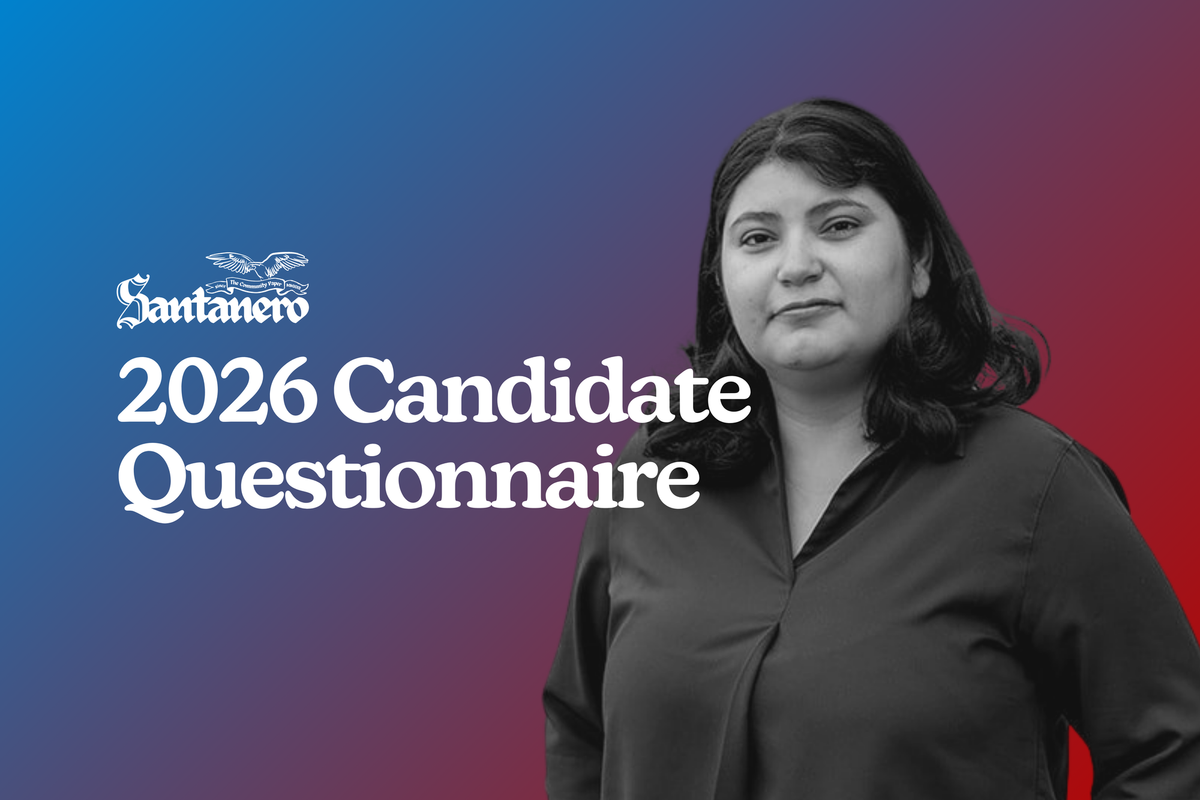
Sandra De Anda, 33, is a lifelong Santa Ana resident, born and raised in the city. She is the eldest of seven siblings and grew up in a working-class immigrant family with parents from Sinaloa, Mexico.
De Anda spent much of her childhood in Section 8 housing in Santa Ana’s Cornerstone Village, commonly known as the Minnie Street neighborhood. She says her upbringing exposed her to the high cost of living, food insecurity, limited access to healthcare, surveillance and immigration enforcement. As the oldest sibling, she learned early how to navigate complex systems and find solutions for her family and others in her community.
De Anda is the Director of Policy and Legal Strategy for the Orange County Rapid Response Network, which responds to immigration enforcement activity and connects immigrants and affected families with legal resources and support. She began volunteering with the network in 2017 before later joining its staff and becoming one of its directors in 2025.
Her community involvement also includes working at the Santa Anita Community Center in 2015 and involvement with Chispa. De Anda attended Kennedy Elementary and Villa Fundamental in Santa Ana.
She is running for the Ward 4 City Council seat currently held by incumbent Phil Bacerra.
Per our policy, The Santanero does not endorse any candidate or ballot measure.
How to read this questionnaire
Questions are grouped by issue. Use the blue search tool below to find a topic or question and jump directly to De Anda's full response. The complete wording of each question is preserved so readers can see exactly what the candidate was asked.
A separate section featuring questions submitted by community members can be found near the end of this questionnaire.
Affordable Housing ⬇️
What is your specific plan you'd present to the Council to create additional affordable housing in Santa Ana, excluding only market-rate or luxury developments that designate only a small portion of their units as affordable?
De Anda: Instead of negotiating with luxury developments to reserve a section of their housing, entire zones should be delineated explicitly for affordable housing, and others should become bidding grounds for luxury housing as scarcity creates competition. Having luxury housing be prioritized causes prices to spike, and the micro communities for low income folks become hyper competitive and they can’t afford the community built around the luxury housing that has replaced the original one. Attracting wealthy residents while displacing locals is not serving the constituency, it's betraying the constituency and building a new one based on financial incentive. This is bad faith stewardship.
AI Data Centers ⬇️
Do you support allowing AI data centers in Santa Ana?
If so, do you believe the City has sufficient water and infrastructure to support them without increasing water rates or reducing water reliability for residents and existing businesses? If a AI data center were proposed, what requirements would you impose on its water use and wastewater discharge?
De Anda: No. This would foster extreme dependence on large corporations. In addition, they would bring in their own workforce, exacerbating the gentrification crisis and housing instability, prioritizing infrastructure for middle- and high-income transplants while investing nothing in the local area—residents who are then forced to move out of the city.
The water usage statistics are egregious for a complex that produces no services for the local community. It would be completely drained for outside interests in an industry that has yet to even see profits. This would put our ownership of our water—and our residents' right of access to it—at risk.
Finally, these centers contribute to a massive surveillance infrastructure that is actively criminalizing residents and enabling illegal and extrajudicial federal law enforcement action, such as that of ICE. This also puts city residents at risk, since proximity to surveillance infrastructure increases the chances of being targeted due to ease of access.
AI x Police Response ⬇️
The City of Buena Park has opted to use Artificial Intelligence to handle some non-emergency phone calls. Is this an option you see yourself supporting for Santa Ana Police in the future? Why or why not? How would the budget support this?
Correction: The questionnaire originally stated that Buena Park had opted to use AI to handle emergency calls. The program involves certain non-emergency calls. The response below was submitted in response to the original wording of the question and is published as submitted. We regret the error.
De Anda: Absolutely not. The technology is not there, and it can lead to dangerous consequences for residents if the AI hotline misdirects what service is needed, especially in life-threatening situations. Generative AI is ultimately self-affirming; it is designed for customer satisfaction, even if that means giving false responses.
Automatic License Plate Readers ⬇️
Automatic license plate readers (ALPRs) have become a subject of debate over privacy and their use or misuse by law enforcement. What is your position on the use of ALPRs in Santa Ana, and how do you defend that position?
This question does not ask you to simply weigh the perceived pros and cons of ALPRs. Please clearly state your position and cite data or evidence that supports it.
De Anda: I'm against ALPRs and flock cameras, period. This technology invites the same real risks every time: how the data is used, which communities end up disproportionately surveilled, and the funding it takes just to watch our own neighbors. That's money and attention Santa Ana can't afford to waste when we have immediate needs that would bring a far greater return: after-school programs, youth mentorship, real economic opportunity, and community-based violence prevention. No technology is foolproof, and I'm not willing to gamble our residents' privacy and our City's limited resources on a tool that hasn't proven it's worth either. It is time tested notion that proximity to the infrastructure leads to increased targeting due to ease of access.
Budget Participation ⬇️
How would you increase resident participation in Santa Ana’s budget process or in general meetings, particularly among residents who do not typically participate in City affairs? Name specific changes you would encourage.
De Anda: I would help the City host budget forums across the city, especially in the district I will be overseeing. The Sunshine Ordinance mandates that the City conduct community outreach.
Campaign Goal ⬇️
If elected, at the end of your first year of the new term (December 2027), name one concrete result for Santa Ana that you intend to accomplish.
De Anda: By the end of my first year, I want Santa Ana to have taken real, concrete steps toward a public safety approach that funds and resources our police the way they need to keep Santaneros safe, while also making clear that our immigrant community is part of that same protection. I want to land in a place where this city genuinely protects its own, looks out for its own, and puts real safeguards in place so every resident, regardless of where they were born or their immigration status, knows this city is here for them. That's the concrete result I'm working toward: a Santa Ana where safety means everyone, and no one has to wonder if they're included in it.
Community Spaces ⬇️
Ward 4 has fewer community spaces than other wards. If elected, what action will you take to bring a community space to Ward 4?
Note that a community space in this question is defined as a place with four walls and a ceiling with AC that are owned or facilitated by the City. Similar to this is a cooling center or center that Santaneros can visit.
De Anda: Ward 4 deserves what every other part of Santa Ana has. We experience the same extreme weather and heat, the same need for after-school care and support, and the same need for strong programs our youth can rely on, yet we have fewer community spaces to meet it. I would push the City to identify underutilized or City-owned property in the ward suitable for this use, including co-op spaces and multi-use facilities that serve more than one purpose, whether that's after-school programming, a cooling center, or general community gathering space.
Approaches like this make these efforts not just affordable, but sustainable and reliable for residents over time. I'd also pursue the same standard I bring to any City investment: development impact fees and real community benefit requirements from any development approved in Ward 4, rather than relying solely on the general fund.
There are many vacant commercial structures being strategically held empty by development profiteers, these can theoretically used for all sorts of third spaces.
Construction Project Relief ⬇️
If elected, how will you advocate for residents and provide relief affected by construction, aside from redirecting to city staff? Do you believe the City is notifying the public enough regarding projects that will ultimately affect them? If not, what do you propose?
De Anda: The City doesn't do enough proactive notification, and that has to change. Residents deserve mandatory, multilingual notice before construction begins on their block. As a Councilmember, I will engage directly with affected residents, and advocate for real mitigation, compensation or service adjustments, when construction significantly disrupts daily life.
This isn't only about construction. There are intersections with repeated incidents even without any construction happening, and residents are tired of raising the same concerns without real action. When residents speak up, they should be listened to.
We're a mixed-transit community. We travel by car, by bike, and on foot, and every resident deserves to feel safe moving through this city. That means trusting residents to identify the trouble spots they live with every day, and responding with real respect and real solutions.
Engagement with Youth & Seniors ⬇️
What is your plan to expand youth and senior engagement and ensure more Santanero youth and older adults have a voice in City affairs? Given the City’s fiscal challenges, how would you maintain that engagement if funding for new programs or initiatives is limited?
De Anda: I'm going to work to revive commissions like Parks and Rec and the Youth Commission. Ward 4 also lacks a community center where these conversations can begin. I will work to ensure that the senior centers are fully funded and staffed.
Gang Violence x Police Response ⬇️
Over the past 35 years, the City has allocated billions of dollars in cumulative taxpayer spending toward policing, including funding for gang enforcement efforts intended to combat gang violence. Despite these investments, gang-related homicides remain a serious concern. While there are many factors surrounding gang violence, if elected, what specific directives will you bring to the dais to prevent and reduce gang violence in Santa Ana?
Note: This question is not asking to solely identify or list the underlying causes of gang violence. Please focus your response on the actions you would take if elected.
De Anda: Strong after-school programs, real jobs and pathways to real careers, and violence and gang prevention programs should all be well-funded priorities. I would direct real investment toward partnering with community-based programs that give our kids and teens reliable spaces to be, to learn, and to grow—the same kind of structure that shaped who I am today. I would propose the City formally fund these partnerships directly, rather than continuing to expand policing budgets alone, especially when gang-related homicides remain a serious concern after 35 years of that same approach.
Green Space x Youth Sports ⬇️
City parks are a central part of life for many Santaneros, particularly our youth. Do you believe the current process for reserving and renting park space provides fair and equitable access to residents, youth organizations, sports leagues, and community groups? Why or why not?
What, if anything, would you encourage the City to change about the current process? Is part of your solution to build more parks? If so, how will that be paid for given budget difficulties?
De Anda: We definitely need more parks, especially as vacant buildings and land across Santa Ana get pursued for lucrative development projects led by non-residents who have no stake in this community. Every one of those sites is an opportunity for green space that instead becomes another investment property.
On the current reservation process, I don't believe it provides equitable access. I'd support a rotating, no-cost third-space model that requires equitable cycling in and out, rather than the same well-resourced groups locking in the same slots indefinitely, paired with a separate, transparent cost structure for membership-based use versus one-time use. I also believe we can ease pressure on our existing parks by investing in low-infrastructure outdoor spaces, real shade, real seating, spaces that don't require a reservation to use at all.
Part of the solution should include micro-parks and real collaboration with our school district to open underused space for community use. But that can't be the whole answer. Treating micro-parks and school partnerships as a complete solution would be a cop-out. Santa Ana needs a genuine commitment to new park space, funded through tools like development impact fees on the very projects displacing potential park sites in the first place, not just creative workarounds that avoid the real investment this city need.
Homelessness Response ⬇️
The City’s approach to homelessness combines outreach and offers of assistance with enforcement of applicable laws and ordinances. Yet some individuals continue to cycle between homelessness, arrest, release, and a return to the streets. Do you believe the City’s current approach is effective for individuals caught in this cycle? Why or why not, and what, if anything, would you propose as the next steps?
De Anda: Absolutely ineffective. The rotating door of arrest, release, and return to the streets costs extreme public resources and leads to real harm and abuse, without solving anything. We can't integrate unhoused residents into housing or the workforce overnight, and honestly, some of them may not even want that, and that's worth respecting, not ignoring. I believe in more practical, immediate models: real investment in public restrooms, mobile hygiene stations, and ideally, hygiene bathhouses. Infrastructure like this would radically shift how housed and unhoused residents relate to each other and make real integration far more viable over time.
We also need more housing, period. There's no point passing responsibility to the County if the County won't meet us halfway. We have to work with what we actually control. Over-policing and criminalizing behaviors tied to mere survival doesn't work. It only reinforces an adversarial relationship between our community and the people living in it without homes. Our unhoused neighbors should never be an easy talking point for politicians looking for a headline, or a pressure valve for officers hitting a quota, and they should never be another entry point for ICE collaboration in our city.
Immigration
Reflection on June 2025 ⬇️
Federal immigration enforcement actions intensified in Santa Ana in June 2025 and residents took to the streets in response. What action did you take to support immigrant Santanero families then and prior? Do you believe your response was sufficient? What could you have done differently or sooner?
Note: This question asks you to evaluate your individual response before and during the June 2025 immigration enforcement actions.
De Anda: I led efforts to train hundreds of community ICE watchers, accompanied families to court alongside ICE Watch, and worked collaboratively with courageous community members and organizations to support families navigating this inhumane immigration system. Before this happened, I was already working years in advance to bring back the sanctuary board to guide us through these times, revise the U-Visa policy, and bring back the legal defense fund—basically, efforts to safeguard against what was to come.
City's Response to Immigration ⬇️
Do you believe the City's response to immigration enforcement was sufficient or not enough in June 2025? Why? Has the City done enough in the time since? If elected, what would you propose the Council to do moving forward?
De Anda: Absolutely not. The response of keeping one's head down and letting the moment pass invalidated the thousands of lives of our constituents living through the suffering of the Trump Administration's family separation policies. Sanctuary Board Now! Legal Defense Fund with at least a one million dollar investment from the City now! No Data Centers or Flock Now!
Response Prior to ICE Crackdown ⬇️
What actions had you taken to support Santaneros affected by immigration enforcement before June 2025?
Future plans or general statements of support does not answer this question.
De Anda: For nearly a decade, I've organized alongside working families through the Orange County Rapid Response Network, coordinating legal response, direct services, and advocacy efforts across the county as immigration enforcement intensified. I've helped connect families directly with legal resources, trained community members to know their rights and respond safely when enforcement actions occur, and advocated for local policies to protect our community.
My biggest, most concrete win came from this same commitment: I led the effort to reform Santa Ana's U-Visa certification process after discovering the City was denying immigrant crime victims at an alarmingly high rate due to a misinterpretation of the law. I presented directly to the Police Oversight Commission and helped secure the changes Santa Ana ultimately adopted. This is real policy change that protects immigrant crime victims to this day.
Our families and our children deserve better. They shouldn't have to live in fear, and every child deserves to trust that their parents will be waiting for them when they get home. This work has been the center of my career, and it's exactly why I'm running: to bring that same commitment to City Hall.
Position on ICE ⬇️
What is your position on ICE today? Do you believe ICE should be abolished, reformed, or kept as is?
Note for the second part of this question, you must select one of three options only and explain why.
De Anda: ICE needs to be abolished yesterday.
Measure N Outcome ⬇️
If voters choose not to continue the Measure X sales tax rate past 2029, how would you address the resulting impact on the City’s budget?
Identify specific services or spending you would reduce, revenues you would pursue, or other actions you would take to balance the budget.
De Anda: Transparency and accuracy come first, especially when deciding what comes next, with or without new revenue or taxes to rely on. An audit should be the starting point. There are always opportunities to reduce duplicative spending and streamline processes, so the funding we already have is working efficiently.
Before we ask residents and working people to fill any funding gap, we should ask the big businesses and corporations profiting in this city to pay their fair share. That means pursuing real revenue tools like a vacancy tax on properties held empty for speculation and development impact fees on large projects.
Balancing our budget at the cost of working people already struggling to make ends meet is never the answer. We can close this gap responsibly, without breaking the backs of the people who can least afford it.
Officer-Involved Shooting Outcomes ⬇️
When someone is killed by law enforcement—whether armed or unarmed—or when a bystander dies as an unintended result of police action, the circumstances and legal findings can vary significantly. Yet families may still feel powerless when investigations, appeals and other legal processes result in no criminal or civil liability, particularly when the person killed was unarmed or an innocent bystander. Some may believe the system provides law enforcement greater protection than accountability. Do you believe that concern is justified? What is your role, if elected, as Councilmember, when a family believes the accountability system has failed them, and how do these cases affect public trust in policing?
What role should Santa Ana’s Police Oversight Commission have, and would you expand, limit or maintain its current authority? Be specific.
De Anda: The Police Oversight Commission is a net good, as long as it holds to that same principle. Every agency needs real accountability. But that accountability should never become a bargaining chip used to justify growing the police department's size or resources when our budget is lacking in other areas. I would only support expanding the Commission's authority under those same conditions, paired with real, structural community ownership over the Commission itself: community-nominated seats, binding authority over its own recommendations, and independence from being negotiated away by the department it's meant to hold accountable.
Body cameras are a clear example of where good intentions need real limits. They're valuable for accountability, but they carry two serious drawbacks. First, there's no functioning follow-up system that actually holds officers accountable once footage exists. Second, they expand state surveillance and put real strain on personal privacy. California is a two-party consent state, and footage of non-law-enforcement individuals captured on body cameras should be inadmissible as evidence. Police should never be allowed to pursue additional charges against someone based on evidence that isn't admissible in the first place, and body cam footage should never be used as a bargaining chip for the department to trade for more resources in exchange for Commission oversight power. I support the Commission's principled expansion, with all of these limitations built in from the start.
Editor’s Note: California law generally requires consent to record certain confidential communications, but separate laws govern law-enforcement body-worn cameras. The candidate's proposal that footage of non-law-enforcement individuals “should be inadmissible” describes her policy position, not the current general rule of admissibility.
Parking ⬇️
Parking is a longstanding issue in Santa Ana. What is your plan to fix it?
Note: Weighing the pros and cons of permit parking is not an answer to this question.
De Anda: Parking is a longstanding issue in Santa Ana, and it won't be solved "once and for all" by quick fixes or by simply punishing residents and workers. A major part of the crisis is aggressive ticketing and towing, even though parking options are not readily available.
First, the parking permit system does not reflect the population of the residents who live on a permit street, let alone their guests or the parking overflow from surrounding areas facing similar problems. Until we have an equitable system, we should not penalize residents and workers for a shortage they did not create.
Second, we should look to solutions that have actually worked elsewhere. In Freiburg, Germany, the city uses a "community car park located at the periphery of a residential area"—moving car storage to the edges of neighborhoods so streets can be returned to people, not just parked cars. I would like to see how we can repurpose some of the empty lots for this purpose.
Third, any real plan has to include enforcement reform, updated permit rules that reflect actual household and guest needs, and dedicated funding for new parking infrastructure—not just more tickets. Santa Ana deserves a parking system that works for everyone who lives, works, and visits here, not one that treats them as revenue sources.
Public Transportation ⬇️
Santa Ana has a significant number of residents who rely on public transportation. What is your short-term plan to support and improve public transportation in the city?
What additional transit services or changes, if any, should the City pursue or advocate for with OCTA to accommodate increased transportation needs during the Olympics and other major events?
De Anda: My short-term plan would prioritize bus frequency and reliability on the routes Santa Ana riders depend on; improve stop safety, lighting, and shade; and expand first/last-mile connections to major transit hubs. As we prepare for major events, the City should advocate with OCTA for increased service on high-ridership corridors, extended hours during events, and dedicated event shuttles—while ensuring that any added service benefits everyday riders, not just visitors. Most importantly, affected residents and businesses must have a seat at the table from the start, with real support in place before disruption begins, not after.
Rent Control ⬇️
The Costa-Hawkins Rental Housing Act limits the ability of California cities to apply rent control to certain properties, including many newer rental units. Do you support amending or repealing Costa-Hawkins to give cities greater authority to determine which rental properties may be subject to rent control? Why or why not?
If reelected, what would you propose to the Council on this specifically?
De Anda: It should be repealed—it forces cities to prioritize the economic interests of non-resident developers over those of their own constituents. In the meantime, how do we navigate this? Through city-owned housing with contracted management, legal defense for renters fighting to remain in their homes, and maintenance and support for the rent control policy.
Resident Advocacy ⬇️
Residents can spend years advocating for neighborhood improvements. What system would you put in place to ensure resident requests are tracked, receive a response, and don't go unreviewed? Would you support a dedicated liaison, public request form or tracking system, or another solution? Be specific.
De Anda: I would host monthly office hours and send a newsletter where constituents can submit issues pertaining to the board, which staff would review on a weekly basis. I would also support creating a system of dedicated liaisons.
Small Business Support ⬇️
Given the city's budget forecast, how do you plan to boost economic activity and support the growth and sustainability of small businesses throughout the city? If elected, what would you propose to the Council for consideration?
De Anda: After speaking with several businesses in Ward 4 and throughout the city, ensuring we stop the expansion of ICE in the community will be vital to the sustainability of our city. Business owners have shared how they have had to switch to takeout orders or pivot to ensuring safe options to deliver their services because of the ongoing immigration enforcement that we see every day in the city.
Being able to deter any growth through careful analysis of the procurement of DHS offices would be vital, while also pairing a celebration of these local businesses with block parties and joint community events with the City to bring more foot traffic to these areas of business.
Special Interests vs. Residents ⬇️
When your personal, political, or financial interests conflict with the concerns of the community, what specific actions or standards will you follow to ensure that you prioritize the residents you were elected to serve?
Note: A general pledge or assurance that you will “put residents first” does not answer this question. Please identify the specific standards, safeguards, or actions you would follow when such a conflict arises.
De Anda: Recusals matter. They bring transparency and honesty to the forefront, and residents should feel confident that their Councilmembers are voting in the City's best interest, not their own. Should any moment arise where there's a potential conflict of interest, especially when it comes to decisions involving funding, I will recuse myself.
I will publicly disclose any relationship, financial, professional, or personal, that could reasonably be seen as a conflict before a vote is taken. I will also decline campaign contributions from any individual or entity with a pending matter before the Council that I would be asked to vote on.
Understanding praxis is a crucial part of any principled leadership. I may have my ideals, but those will always be met with the practical moment, what is realistic in the spirit of my ideals that actually helps the material conditions of the people I represent.
Stigma of Santa Ana Being "Ghetto" ⬇️
There is a longstanding stigma that living in Santa Ana means living in “the ghetto”—that it is a place people work hard to get out of, sometimes moving to the Inland Empire or elsewhere and viewing that departure as a sign that they have “made it.” Do you believe that perception still exists? What do you think has contributed to it, and what can you do as an elected official to help make Santa Ana a city where residents are proud not only to come from, but to stay, build a career, raise a family and invest in their community?
De Anda: The idea that Santa Ana is a ghetto is held by residents and non-residents alike. We have been ghettoized even by fellow Santaneros. But we all know from our histories that ghettoization comes from resource deserts and discrimination.
However, we are powerful when united. These gaps in resources have been studied for years, and using our own agency and power, we can push back against this force. No, I do not think we are the ghetto in a derogatory sense. But I know we are being ghettoized, and we have the power to push back and protect our community.
Vacancy Tax ⬇️
Would you support establishing a vacancy tax on residential or commercial properties that remain vacant for extended periods? Why or why not, and what exemptions, if any, should apply?
De Anda: I am in support of it, and I believe the funds could be specifically earmarked for housing units for the unhoused and for infrastructure in affordable housing zones.
Youth Programs Expansion ⬇️
Both the City and school district face significant budget challenges in the coming years. While education is primarily the responsibility of the school district, the City also provides libraries, recreational facilities, and other resources used by Santa Ana youth. How would you collaborate with the school district to make efficient use of limited resources while maintaining services for youth?
What more, if anything, should the City do to expand students’ access to studying spaces, programs, and resources outside of school?
De Anda: There are many ways the City can partner with the school district and local libraries to provide activities and engagement for our youth. Rather than siloing our funding and duplicating services, we can enter into shared-use agreements that maximize what we already have—allowing our youth to benefit from these partnerships while working parents have trusted, safe spaces to rely on for their kids after school. This approach means expanding access to supervised study and gathering spaces without requiring costly new construction the City can't currently afford, using the facilities we already have more wisely, together.
Zoning Code Update ⬇️
The Planning Commission approved an updated zoning map that changes the terminology used to designate certain residential areas, including placing some existing multifamily apartment communities under a Low Density Residential designation like Baker-Rosewood. While the City has stated that this change does not rezone properties or displace existing residents, do you support this terminology?
Why or why not, and what concerns, if any, do you have about how this designation could affect these communities in future land-use or redevelopment decisions? What protections are or ought to be in place if residents are asked to leave due to redevelopment?
De Anda: Zoning plays a role in shaping this city, and while it can be a barrier for some, it's a genuine safeguard for others. Protecting communities like Baker-Rosewood is what prevents big development from ripping the rug out from under working families, overdeveloping their neighborhoods, charging rates residents can't sustain, and destabilizing communities both immediately and over time. I have real concerns about how any zoning designation, including this one, could be used down the line to justify displacement. Terminology matters, and converting existing affordable multifamily housing into something residents can no longer afford isn’t the answer. Strong protections like low density designations can guarantee affordable housing and stability for working families.
Questions from the Community
These questions stem from a submission form posted on The Santanero's Instagram.
Do you support or oppose continued military aid and financial aid to countries outside the United States? Why?
De Anda: I believe our foreign aid priorities should reflect our values, and too often, military aid gets prioritized over the humanitarian and development aid that actually reduces conflict and suffering long term. I support significant oversight and accountability for where military aid goes and how it's used, including consequences when it's used to violate human rights or international law. Resources spent propping up military conflict abroad are resources not being spent on housing, healthcare, and infrastructure here at home.
Do you believe Israel is committing a genocide in Palestine? What is the basis for your position?
De Anda: I have been familiar with the Israel-Palestine dynamic for years. When first hand reports, not only from media but from families of our residents, that genocide was happening, unfortunately I was not surprised. Industrialized extermination of a specific group is how I know how to define genocide in the modern context. I believe that palestinians are suffering this at the hands of the state of Israel and have been for decades.
Residents sometimes ask the City Council to act on issues outside the City’s direct authority, including through resolutions, letters, or advocacy to state and federal officials. When, if ever, should the Santa Ana City Council take such action?
De Anda: I believe the Council should act, through resolutions or advocacy, when an issue directly affects Santa Ana residents' safety, rights, or well-being, even if the ultimate decision rests with state or federal government. For example, immigration enforcement. This is the best example. Even though the Council doesn't control federal policy, our residents are directly affected, and local government has a responsibility to speak up and protect its own community within the limits of its authority.
Do you believe Santa Ana is experiencing gentrification? Why or why not?
De Anda: Yes, gentrification is a real and present concern in parts of Santa Ana. Outside investors are buying up our housing stock, rents are climbing faster than paychecks, and the families who built this city's neighborhoods are the ones being priced out of them. I believe we should consider tools like a vacancy tax, strong tenant protections, and affordability requirements from developers so we’re not pricing out longtime Santa Anans from their own home.
Red or green pozole?
De Anda: Green pozole.
What is your favorite food?
De Anda: Aguachiles.
What is your astrological zodiac sign?
De Anda: Libra (Sep 23 - Oct 22)
Spotlight a Santanero business or place!
Editor's Note: If the selected place, its owner, or business has donated to or endorsed your campaign, an editorial note will disclose that relationship.
De Anda: Kebab Kurry Express (3394 S Bristol, Ste B, Santa Ana, CA 92704)
My favorite thing about Santa Ana is...
De Anda: My favorite thing about Santa Ana is how hard our people work and how fiercely they fight back.
Why should voters give you a chance?
De Anda: I'm a third-generation Santa Ana resident, raised in a working-class immigrant household on Minnie Street. I know what it means to watch your parents work hard and still struggle to get ahead, and that's shaped every fight I've taken on.
For nearly a decade, I've organized alongside working families through the Orange County Rapid Response Network. I led the fight to reform Santa Ana's U-Visa certification process when the city was wrongly denying immigrant crime victims, and I won.
I'll bring that same persistence to City Hall. An honest audit and real accountability, not cuts on the backs of working families. Housing built with real terms and real affordability. A city that never lets ICE tear our families apart. And streets built for everyone who moves through this city, not just the people driving through it.
This isn't a new fight for me. It's the same one I've been in for years. I'm ready to bring it to City Hall.