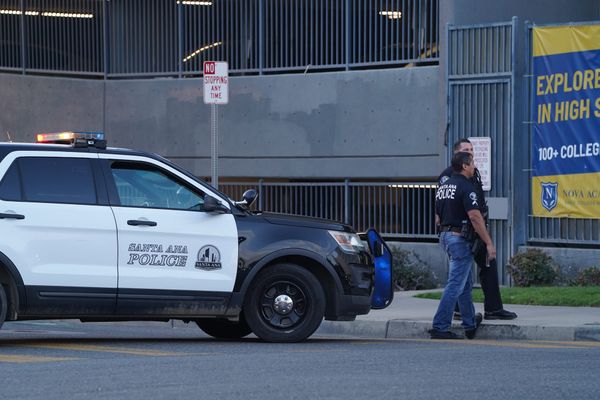
Police detail military equipment use during year marked by 2025 protests

The Santa Ana Police Department presented its annual military equipment report Monday at the Southwest Senior Center, offering residents a review of the department's use of specialized equipment and providing insight into how police leaders make decisions during large-scale protests and mutual aid responses.
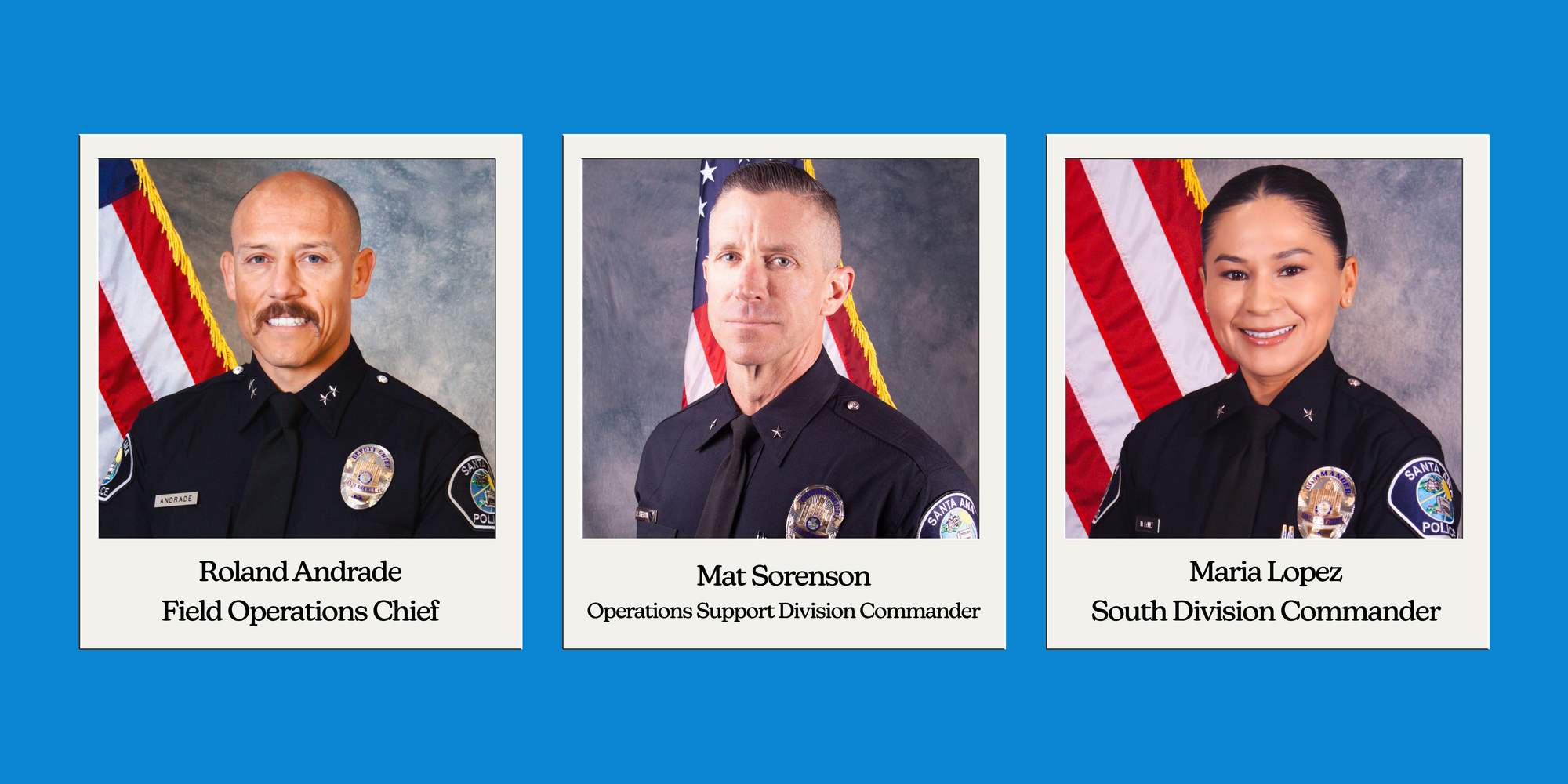
Operations Support Division Commander Mat Sorenson led much of the presentation. Field Operations Chief Roland Andrade also addressed attendees, while South Division Commander Maria Lopez attended the meeting. 16 members of the public attended, along with three city council staffers and two city commissioners.
The report is required under California's AB 481 law, which mandates public oversight and annual reporting on military equipment owned and used by law enforcement agencies.
Report details
According to the report, Santa Ana police deployed military equipment in 36 field incidents between May 1, 2025 and April 30, 2026.
Of those, 21 incidents involved the department's SWAT team. Nineteen deployments of which resulted in arrests or detentions, while officers were unable to locate the subject in nine incidents. The department reported no officer-involved shootings or fatalities associated with those deployments.
The report also documented 11 community events where military equipment, including armored vehicles, was displayed or utilized for public outreach purposes.
Officials reported two complaints related to military equipment during the reporting period. One complaint was determined not to involve a policy violation, while another remains under investigation.
While the report provides a broad overview of deployments, complaints and policy compliance, it offered limited detail about the incidents themselves.
The report does not describe the nature of the complaints beyond summary statistics, explain the reasoning behind investigative findings, identify whether deployments resulted in hospitalizations, or provide information about injuries associated with incidents involving military equipment. As a result, residents can see how often equipment was used, but have limited ability to independently assess the circumstances and outcomes of those deployments.
The department concluded that its military equipment remains necessary for officer and public safety and reported no sustained violations of its military equipment policy.
Questions about protest response tactics also led to a discussion about less-lethal munitions, specifically about the use of rubber bullets (40mm projectiles) and pepper balls.
In a post-meeting email, Sorenson clarified that SAPD possesses two pepper ball launchers assigned to its SWAT team but said they were not serviceable during the June 2025 protests and were not used during the demonstrations.
Drones and helicopter support
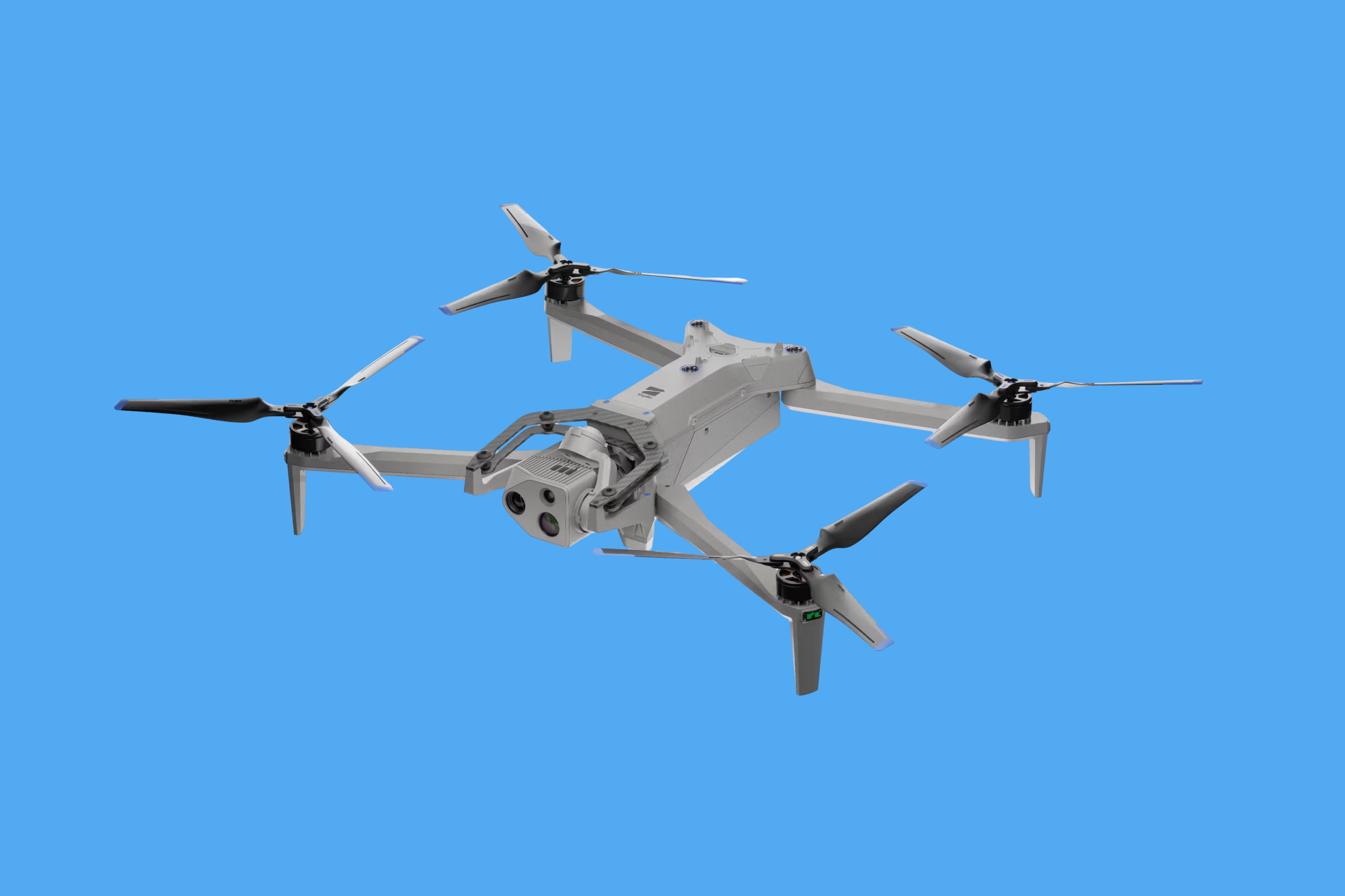
Much of the discussion focused on the department's expanding drone program.
The report notes that Santa Ana police recently received authorization to acquire five drones at a projected cost of approximately $682,900 over three years. Officials said the program is expected to reduce reliance on Orange County Sheriff's Department helicopters and could be expanded in the future if successful.
According to a separate city staff report, the implementation of the drone program allowed the department to reduce its annual helicopter contract from 365 hours to 100 hours, a 73% reduction projected to save the city approximately $1 million over three years.
Sorenson, who oversees the city's helicopter contract, described drones as both a cost-saving measure and a tool that helps command staff evaluate rapidly developing situations. He explained that incident commanders often rely on information relayed by officers in the field, while drones provide a real-time aerial view that can help verify those reports.
As an example, he referenced a January 9 protest outside the Federal Building where two groups eventually converged and some participants began throwing objects, including traffic cones. Police received word that protestors were throwing water bottles and rocks.
"Fortunately, I had a drone overhead," Sorenson said. "I saw that they weren't throwing rocks and bottles and there was no reason for us to go."
Sorenson said the aerial view allowed him to compare reports coming from the field with what he was observing in real time. Based on that assessment, he concluded there was no need to deploy additional Santa Ana police officers.
The example prompted a follow-up question about why a similar approach did not appear to prevent the larger law enforcement response during the June 9 protests.
Department officials said the two incidents differed significantly in size and circumstances. Sorenson explained that the department had not anticipated the event in the same way it had later demonstrations, limiting its ability to position resources and gather information in advance.
"June 9 caught us. We weren't expecting them to happen," Sorenson said.
The exchange provided one of the clearest insights into how department leaders say information influences response decisions. It also offered a level of explanation about the June 2025 protests and related decision-making that has remained largely absent from public discussion amid ongoing litigation and calls for greater transparency from community members.
Mutual aid and protest responses
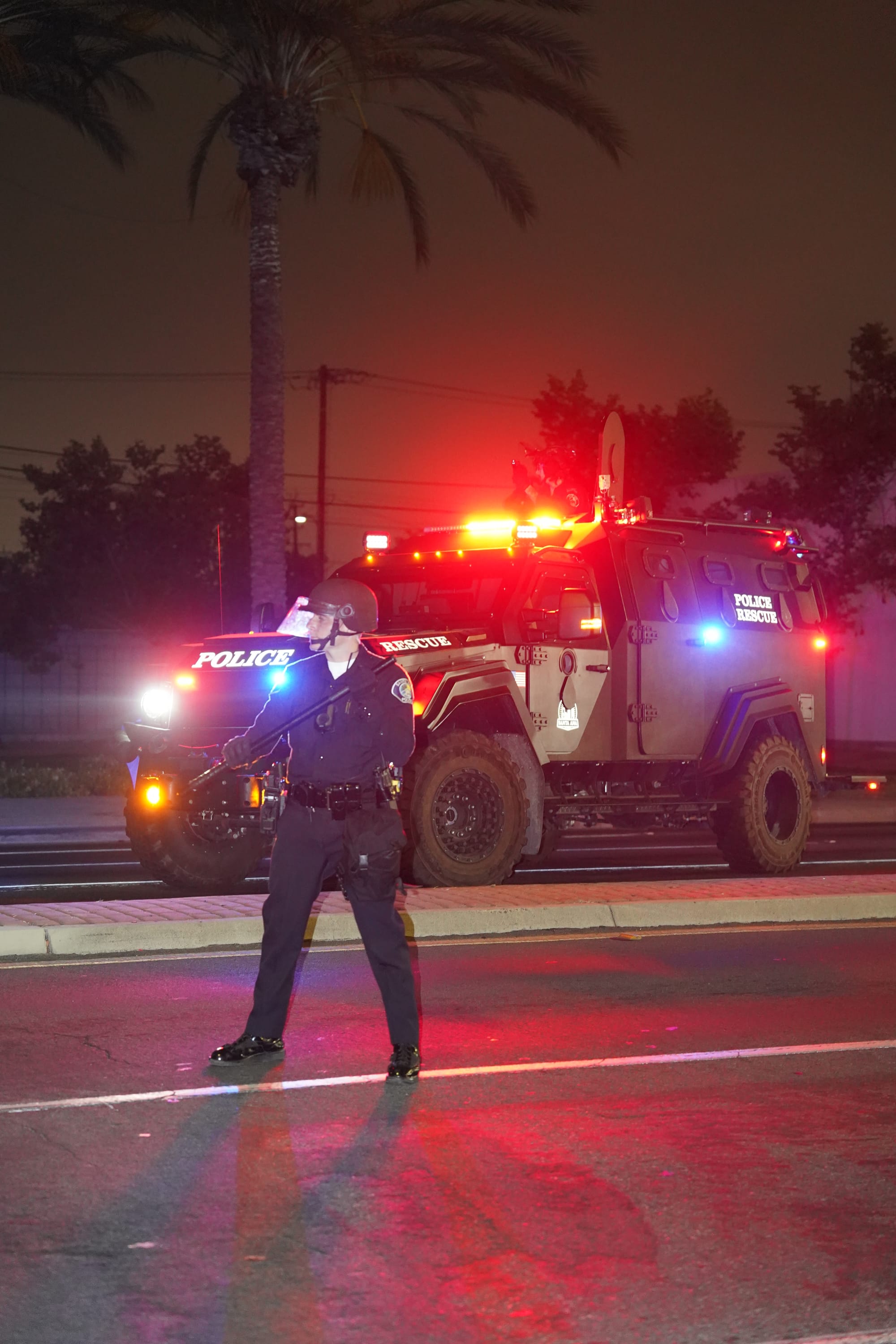
Questions from attendees eventually shifted toward how Santa Ana Police coordinates with outside agencies during large-scale events.
Asked how mutual aid officers communicate and operate under Santa Ana command, Sorenson explained that outside agencies generally work through their own supervisors, who coordinate with Santa Ana command staff through a unified command structure.
"There is also some integration that goes through unified command," Sorenson said.
At the same time, he acknowledged the limits of command authority once officers from outside agencies are deployed into the field.
"The problem is, once they walk out the door, how much control do I have over exactly what I want them to do?" Sorenson said.
He noted that officers may encounter conditions unknown to command staff and sometimes must react to circumstances as they develop.
Andrade similarly emphasized that police responses are driven by conditions on the ground rather than the existence of a protest itself.
"Let's not ignore the fact that there's hundreds of protests that happen in the city all the time that we never respond to," Andrade said. "The crowd dictates our actions, not the other way around."
When asked about differences between the January 9 protest and the June 9, 2025 demonstrations, Sorenson said the two events were difficult to compare because of significant differences in size and circumstances.
Training, experience and officer wellness
The meeting concluded with a community member initiated discussion about officer wellness and the challenges facing modern policing following a question about mental health resources available to officers.
The questions came less than 24 hours after Santa Ana police fatally shot a 15-year-old during a response to a domestic disturbance call, an incident that remained under investigation at the time of the meeting.
In response, Sorenson said one of the biggest changes he has witnessed during his career is the growing number of younger officers entering the profession.
"When I started here in 2000, the most junior person on day watch had 25 years on the job," Sorenson said. "The most junior person now has 25 days on the job."
While acknowledging the comment was an exaggeration, Sorenson said police departments across the country have experienced a significant loss of veteran personnel in recent years, leaving many agencies with younger workforces and less institutional experience.
Sorenson also argued that communication has become a greater challenge for both officers and the public, noting that much of modern interaction occurs through phones and digital platforms rather than face-to-face conversations.
As a result, he said the department has shifted portions of its training away from computer-based instruction and toward scenario-based exercises involving live role players.
"How are you going to learn to talk to somebody if you're doing it on a computer?" Sorenson said.
One community member then asked Sorenson when he had last attended therapy. Before Sorenson could respond, Andrade interjected outlining some the department's mental health resources.
"I will say whenever we have a critical incident, officers are always offered therapy and it's always available 24 hours a day," Andrade said. "If any officer wants to talk to somebody, that's available."
Andrade added that in some cases counseling is mandatory before an officer can return to duty.
"There are certain instances where we will mandate that as a protocol for our officers to meet with a therapist prior to being reinstated," he said.
The discussion also drew responses from community members, including one attendee who cautioned against interpreting concerns about officer wellness and communication training as a request for additional funding.
"I think that when people ask about mental health resources for the PD and for implementing better ways of interacting with the community, we're not asking for you all to take this feedback back to the council and say we want more funding," the resident said.
The attendee argued that improvements in mental health support, training and community engagement should be addressed within existing resources rather than through future budget increases.
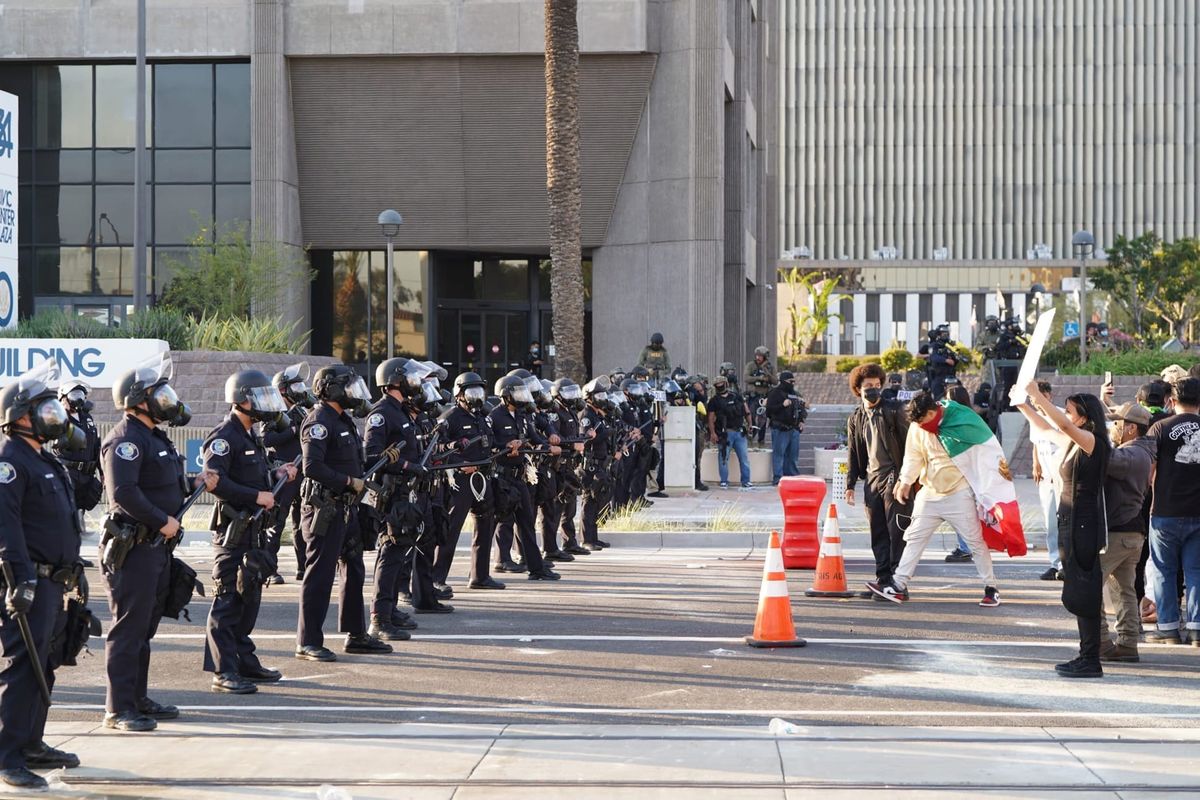
A window into June 2025
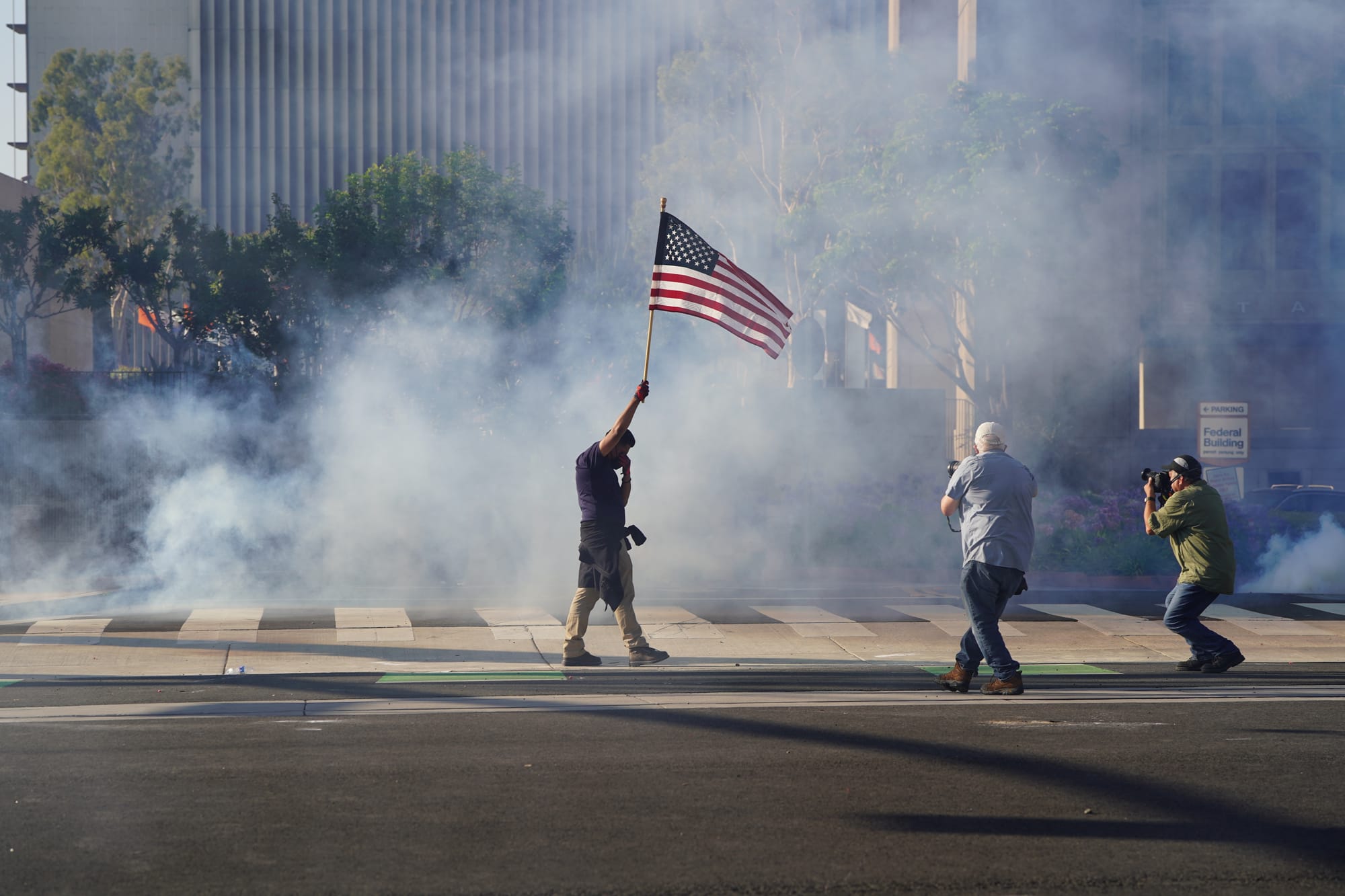
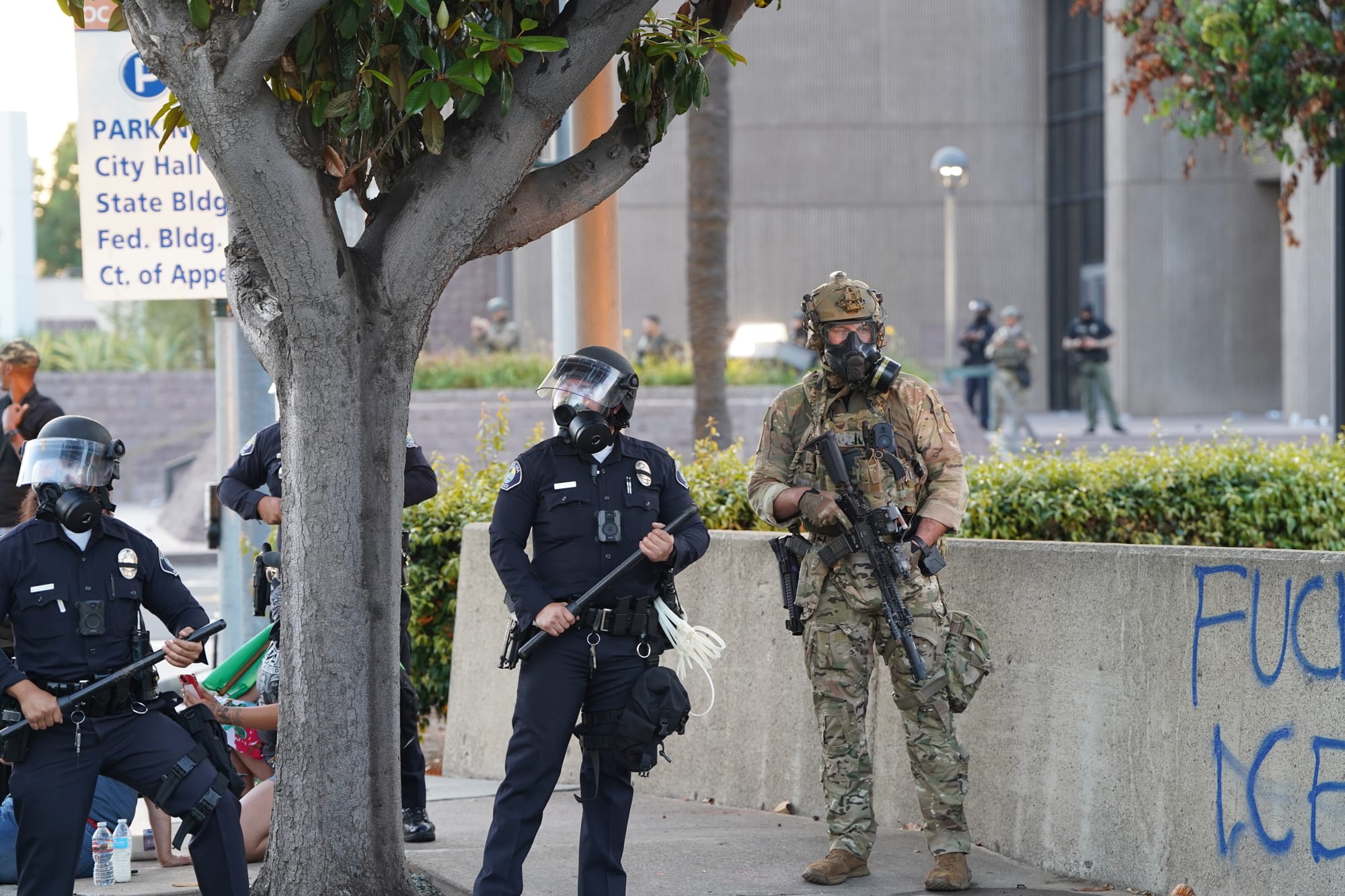
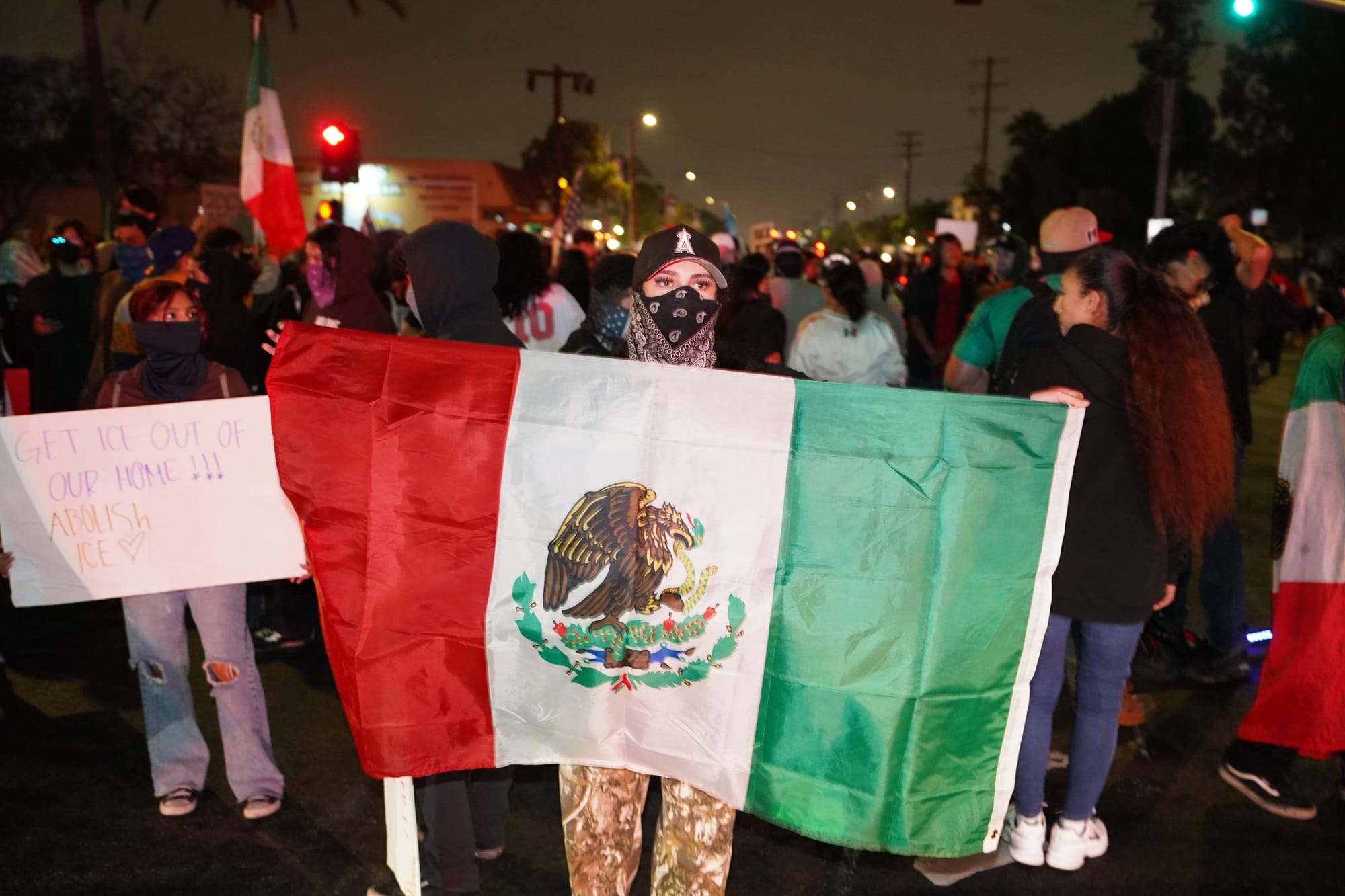
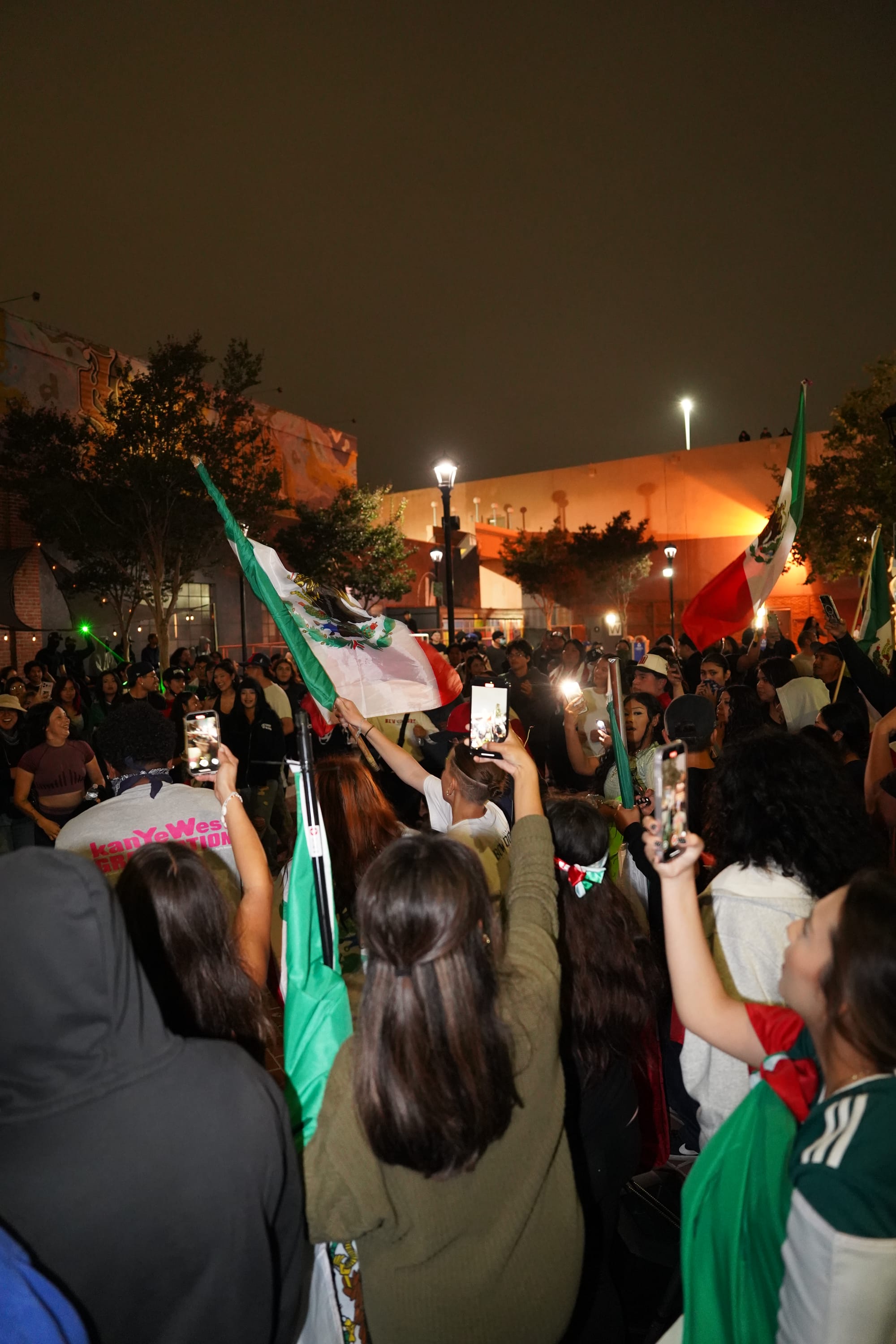
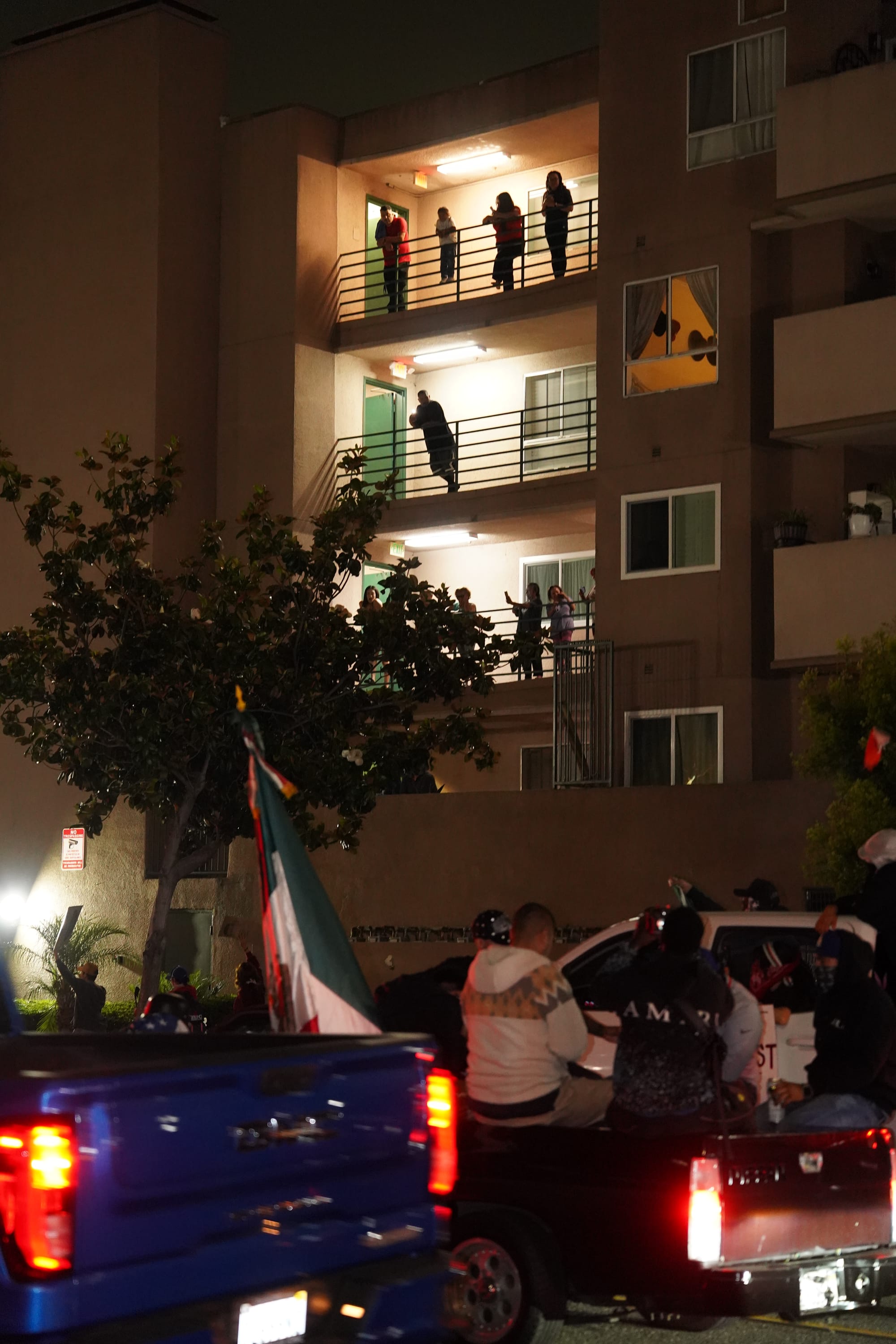
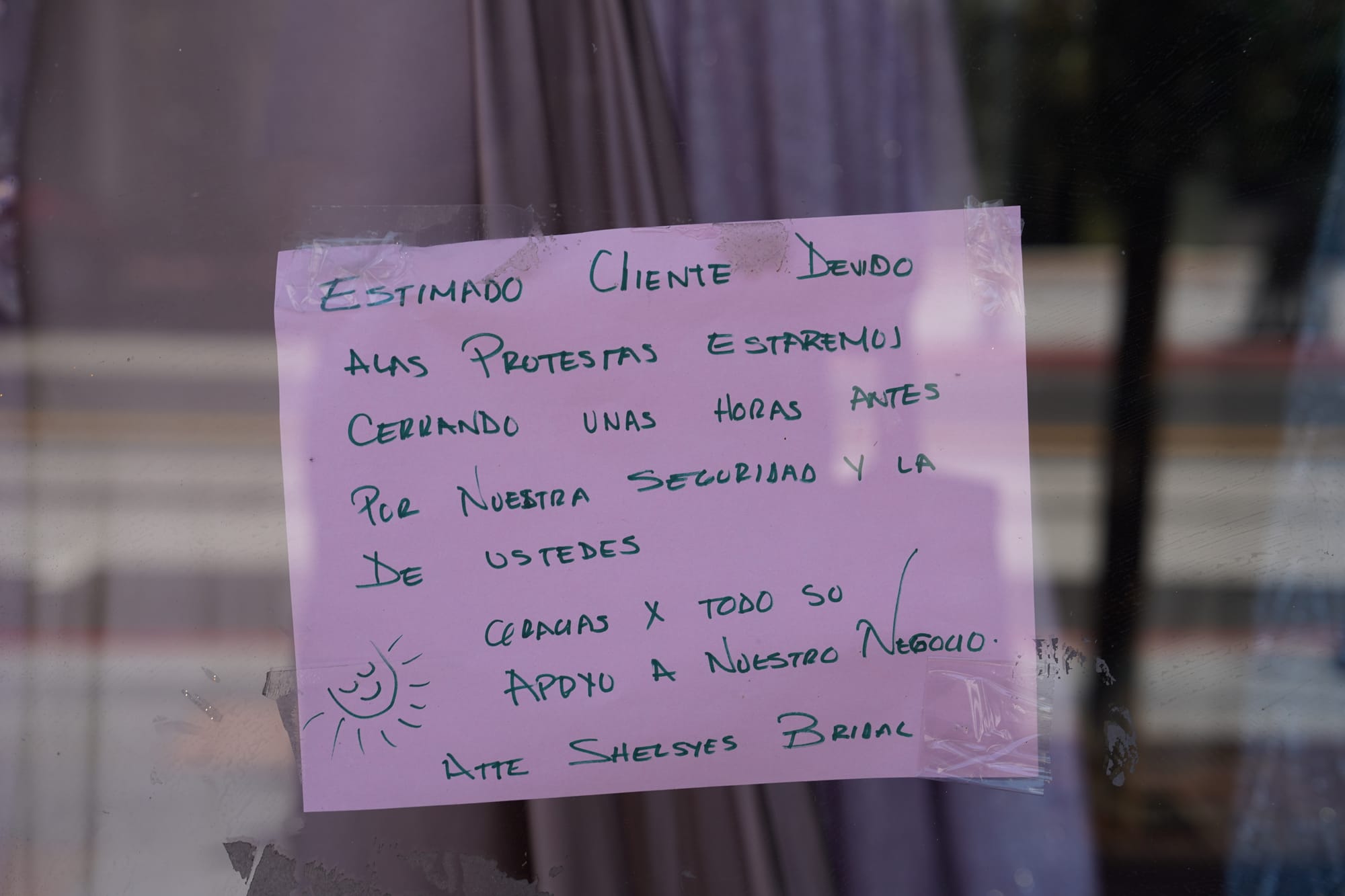
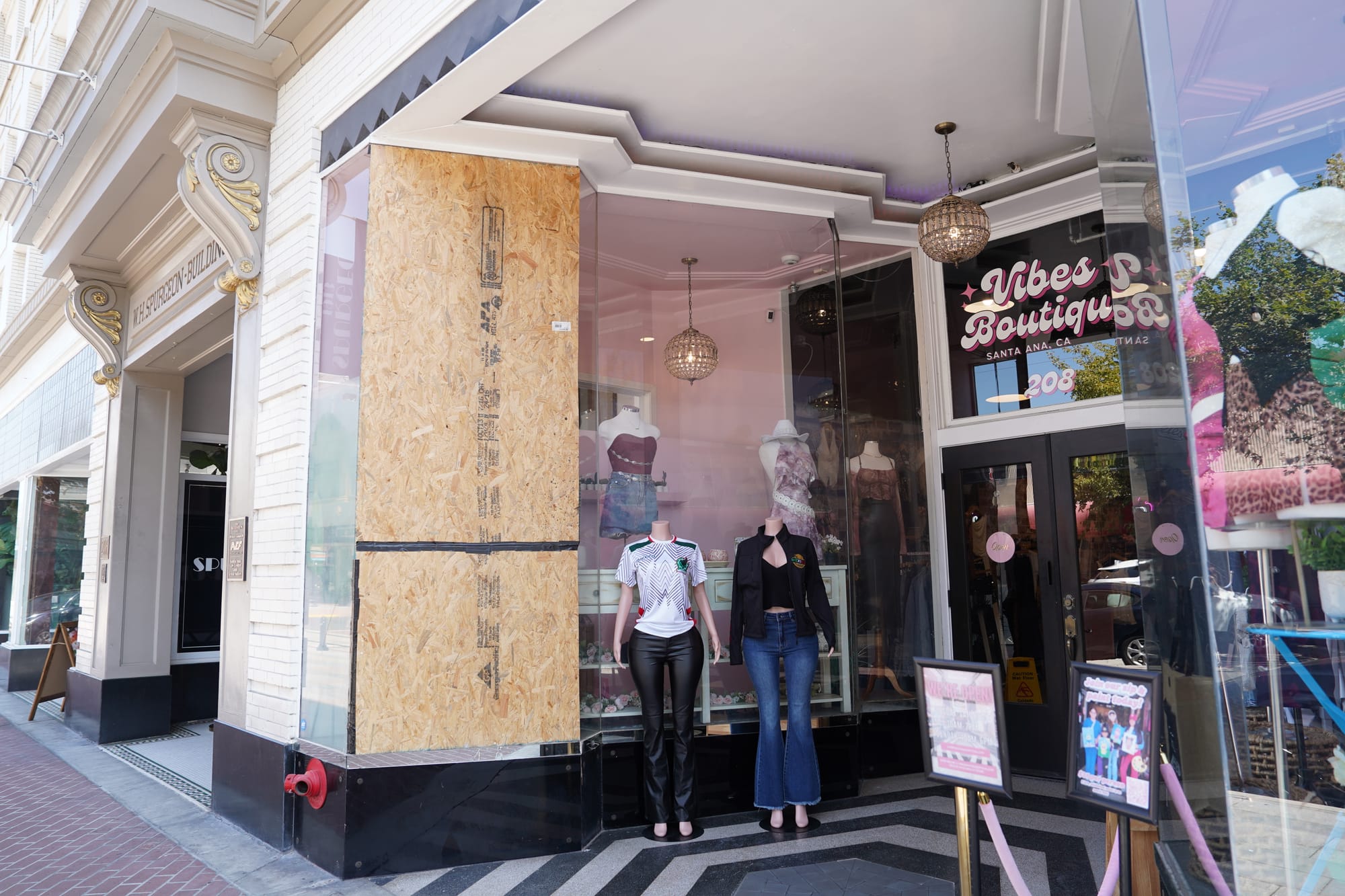
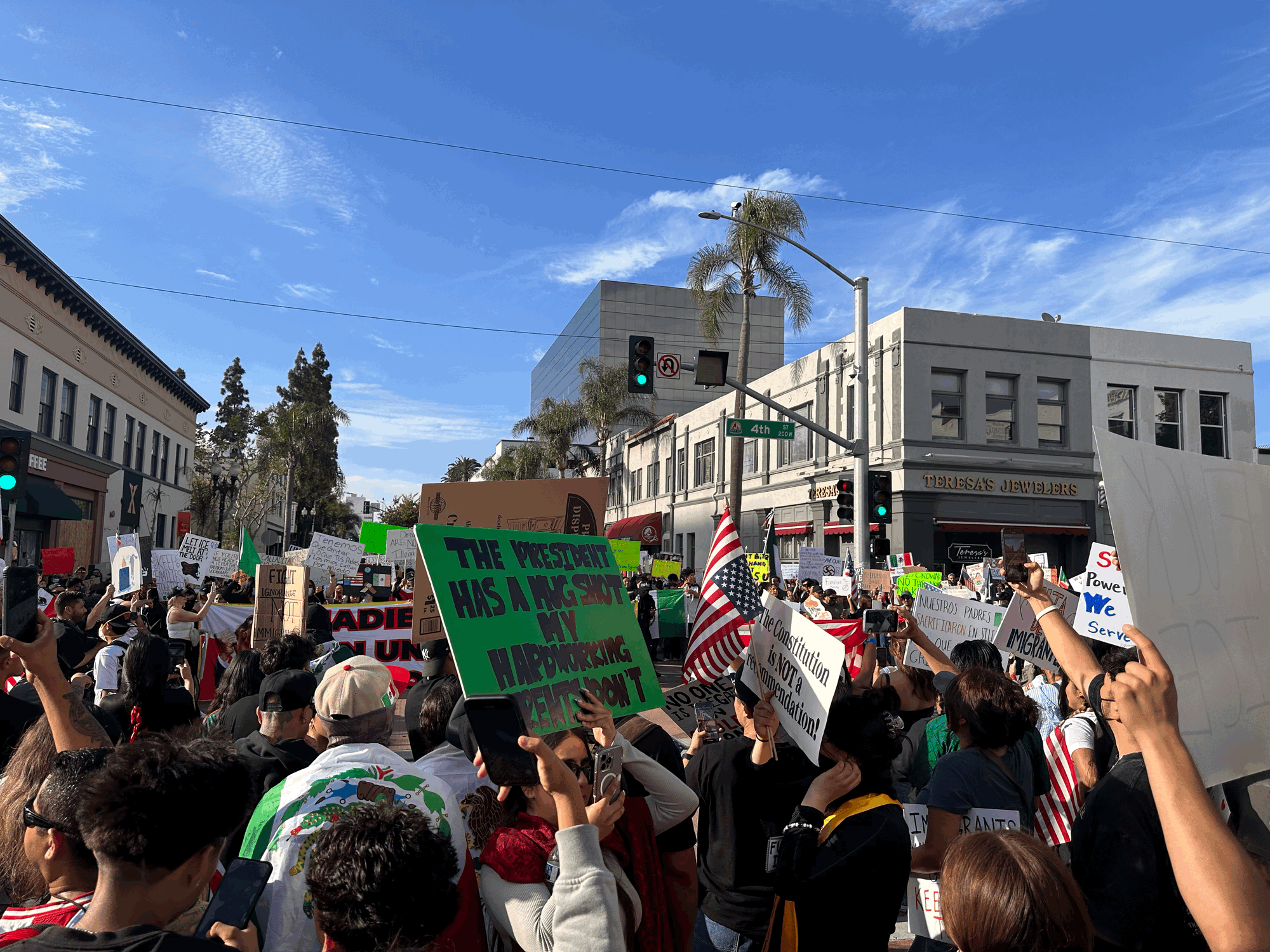
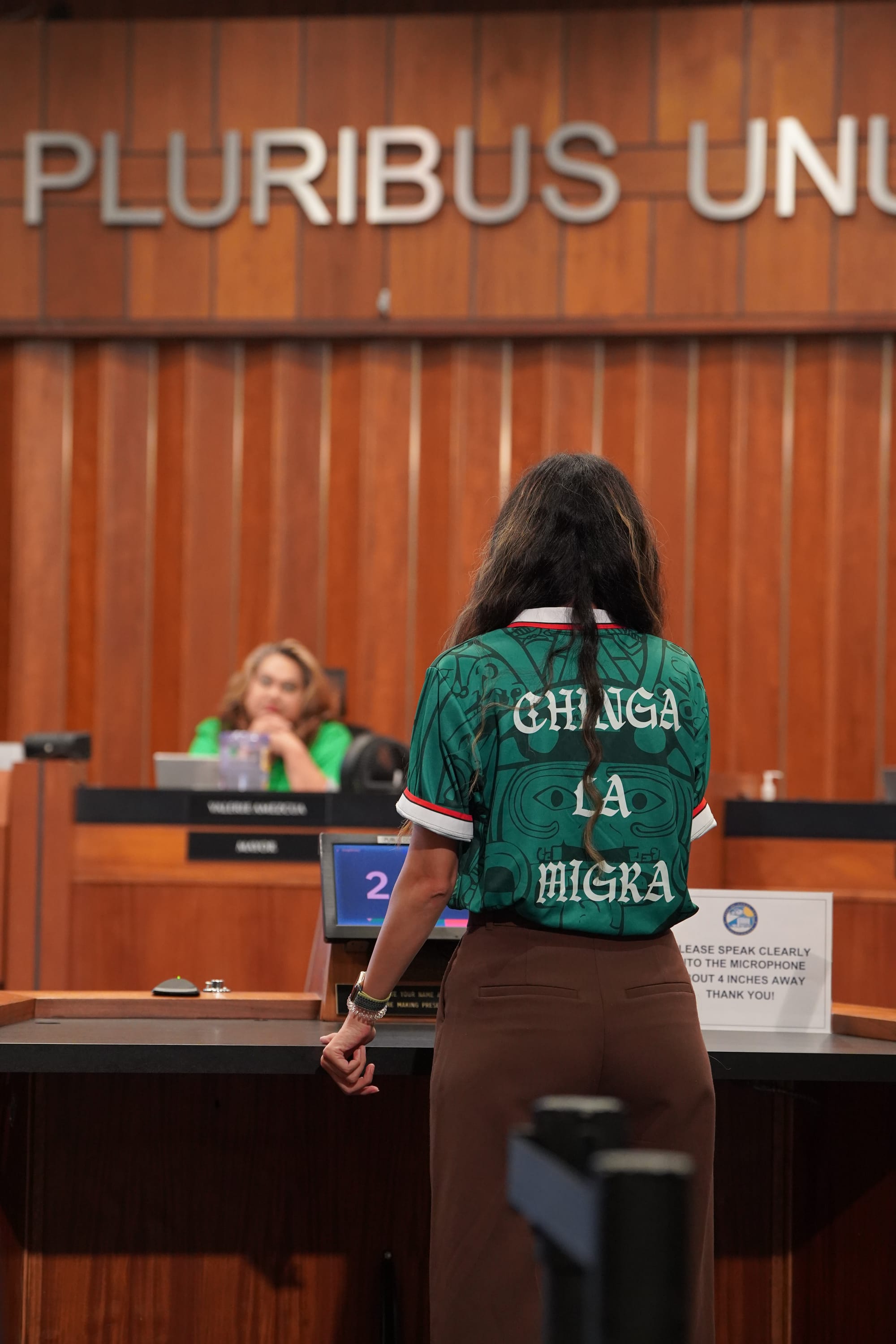
Images taken by Daniel Diaz through the week of June 9, 2025 into the following week. (The Santanero)
While the annual report itself largely functions as a review of equipment inventories, deployment statistics and policy compliance, the public discussion often focused on a broader issue: how decisions were made during some of the city's most scrutinized public events.
Over the past year, city officials and police representatives have frequently cited pending litigation when discussing the June 2025 protests, resulting in public statements that have often remained broad and carefully worded. Public discussions about the events, whether at City Council meetings or smaller community forums hosted by the department, have also been relatively limited.
Monday's meeting did not answer every question surrounding the city's response. However, it offered residents a clearer understanding of how department leaders describe their decision-making process, how information from drones and officers is evaluated, and how mutual aid operations function during rapidly evolving situations.
In that sense, the meeting provided something the report alone could not: additional insight into the reasoning, challenges and lessons that police leaders say emerged from one of the most consequential periods of public protest in Santa Ana history.
This article is part of a series reporting the events of June 2025.